
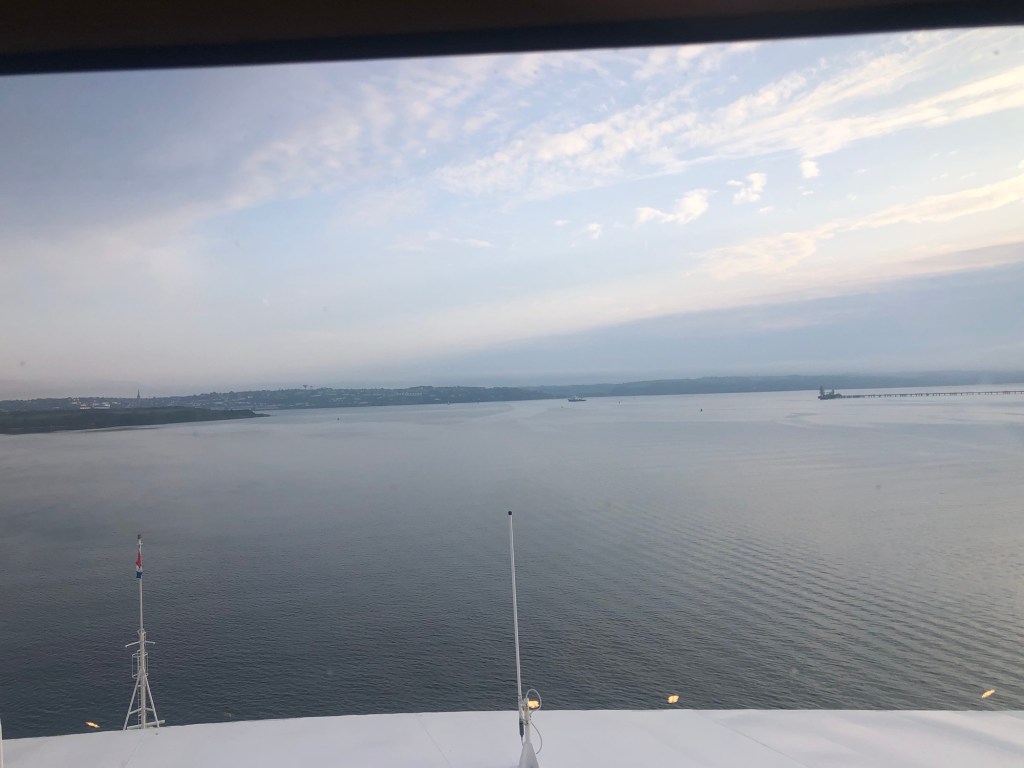
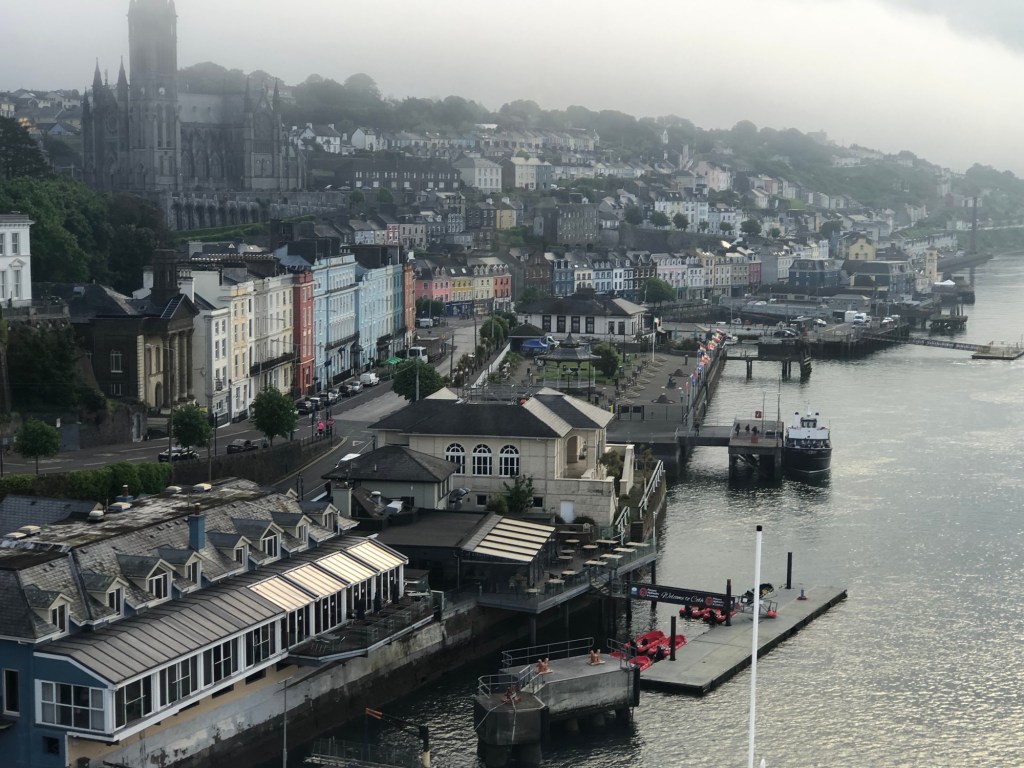
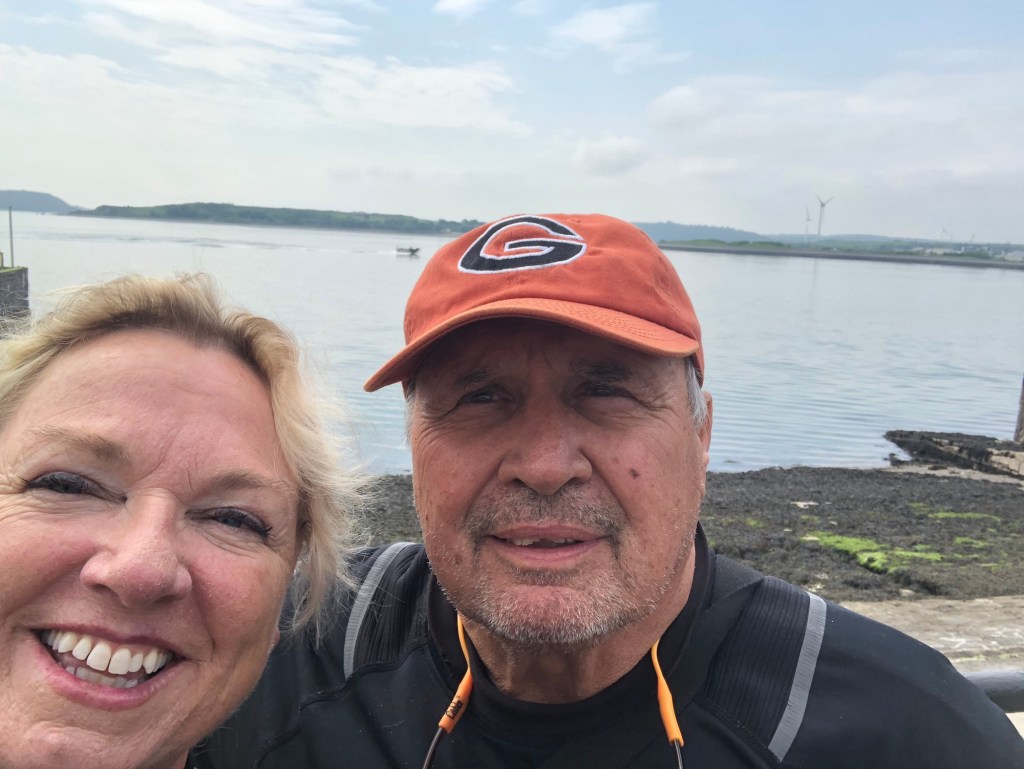
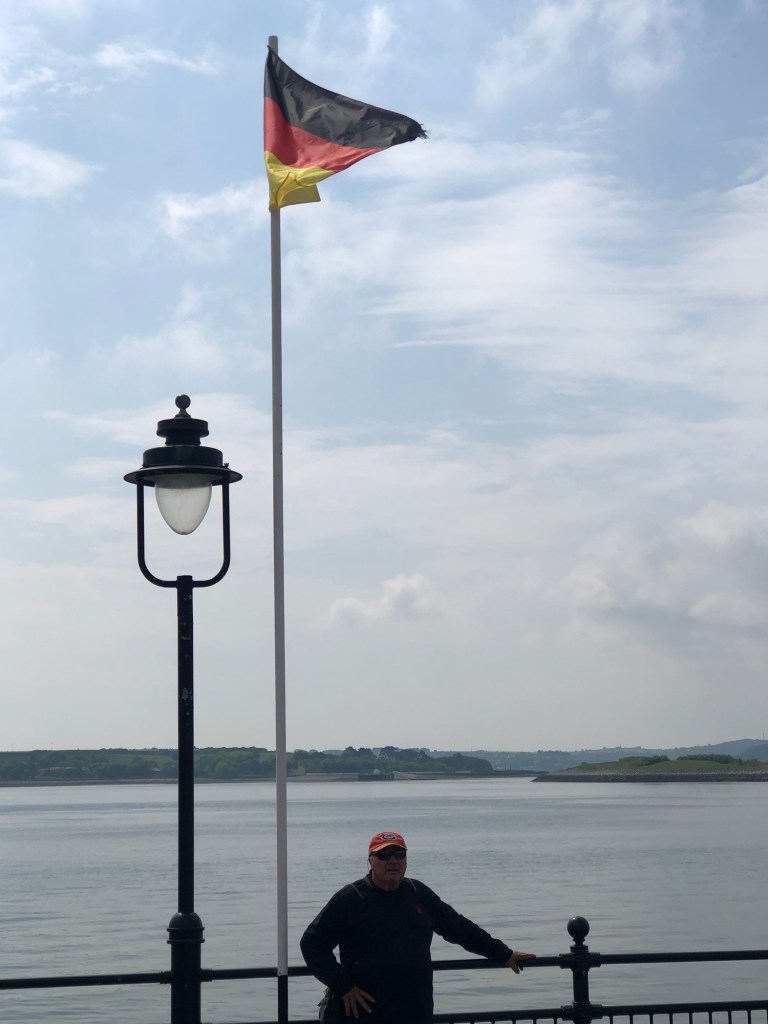
Today we pulled into the Cork Harbour in Ireland. The initial approach was through dense fog and it appeared to have rained during the night as the deck was wet. The ship cruised through the “pea soup” as Rudy described it and then the sun came through as we neared land. There are several small islands in the harbour, but the water itself around the islands is vast. One of the world’s largest and the last stop of the Titanic as well as a British navy stronghold in the day; it could hold up to 400 ships.
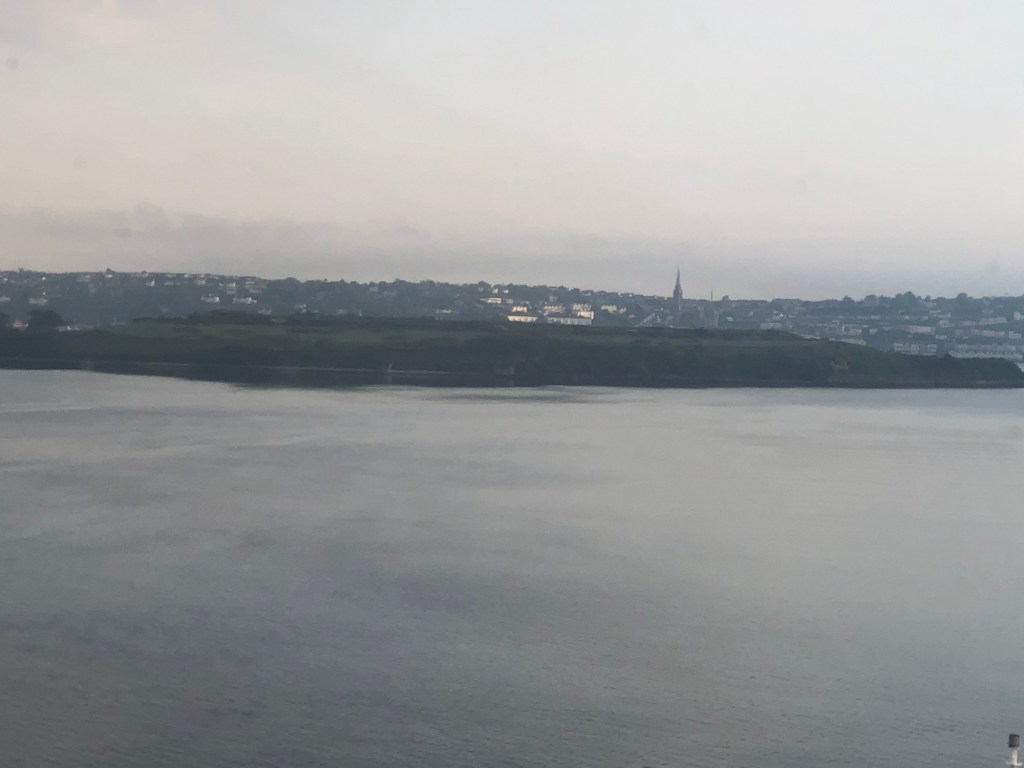
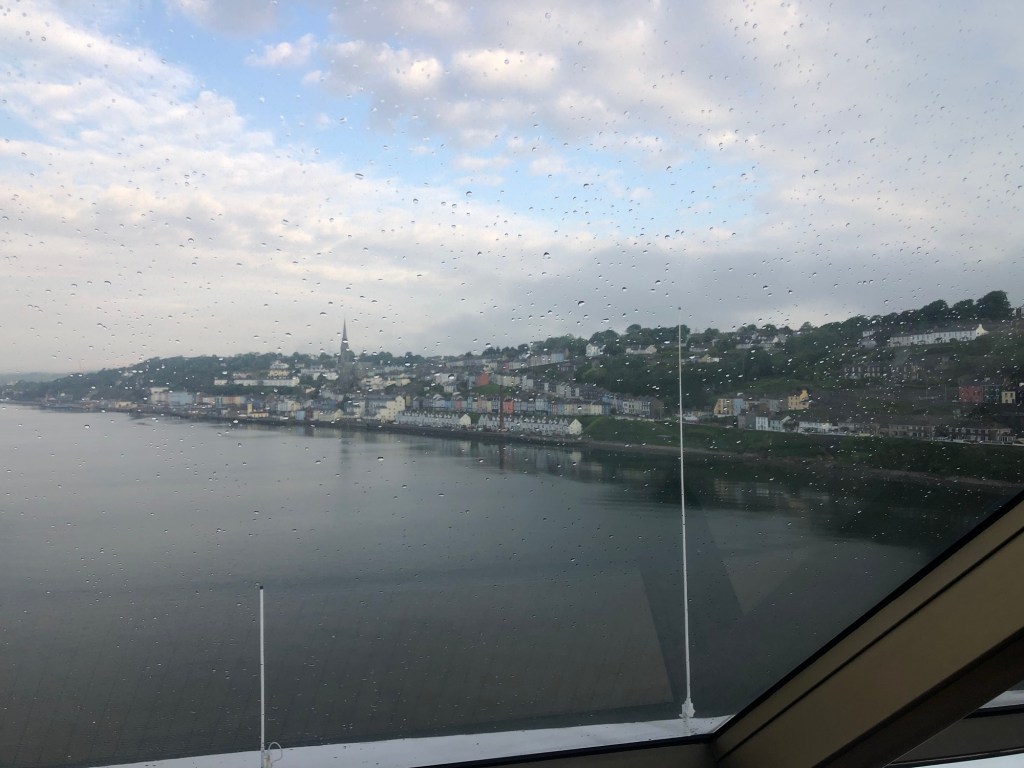
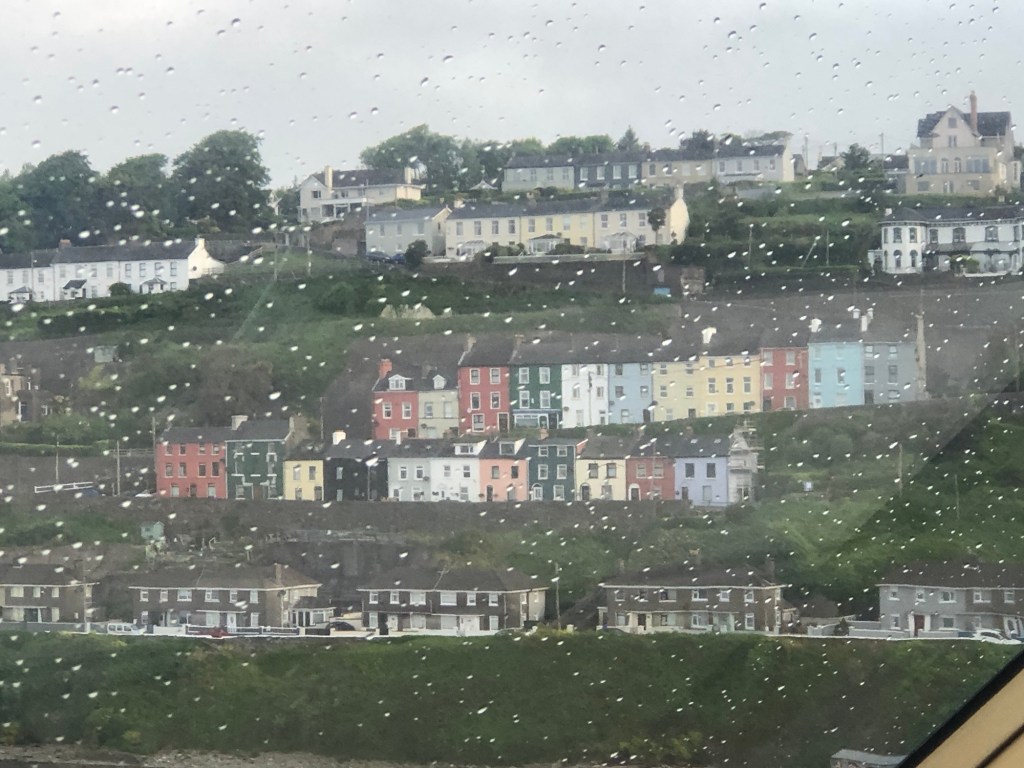
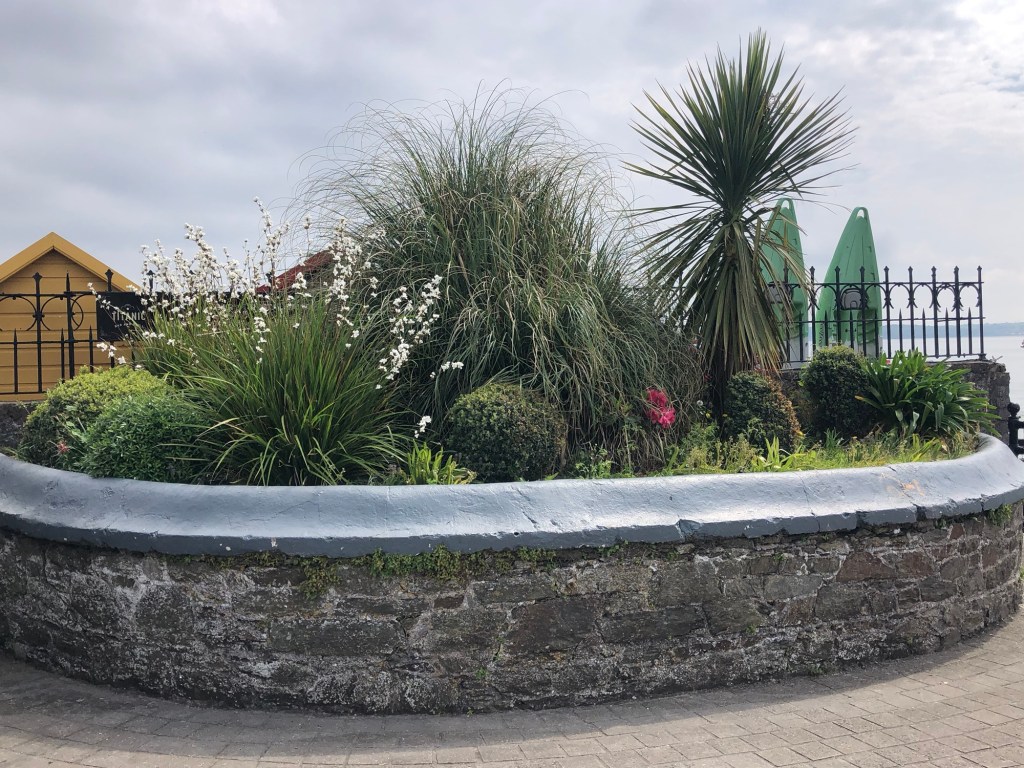
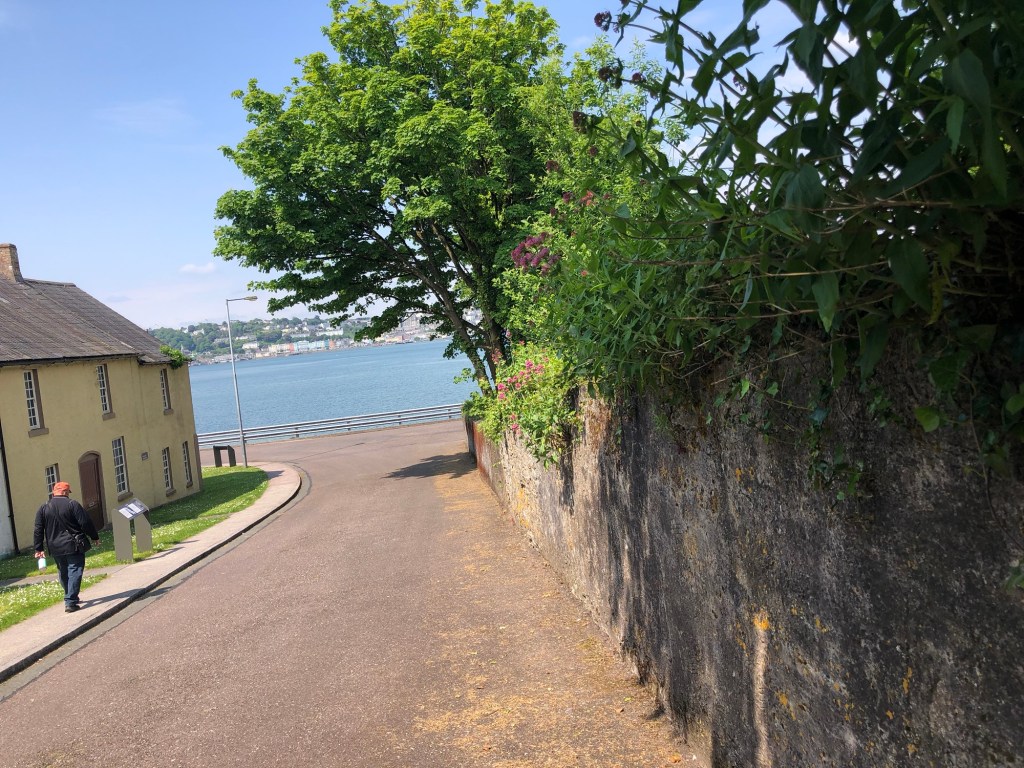
On the final approach to land at Cobh (pronounced Cove) you can see the colourful buildings that are a lovely attraction as well as the spire of the cathedral. Cobh is a stones throw from Cork (20 min by train).
All passengers are required to clear Irish customs whether they are leaving the ship or not. This tedious (and in my view entirely lame and a concoction of needy government workers) process lasted from 8:30 am to 10:30 am. Ho hum. They stamped our passports as a matter of routine. As soon as that’s done we disembark.
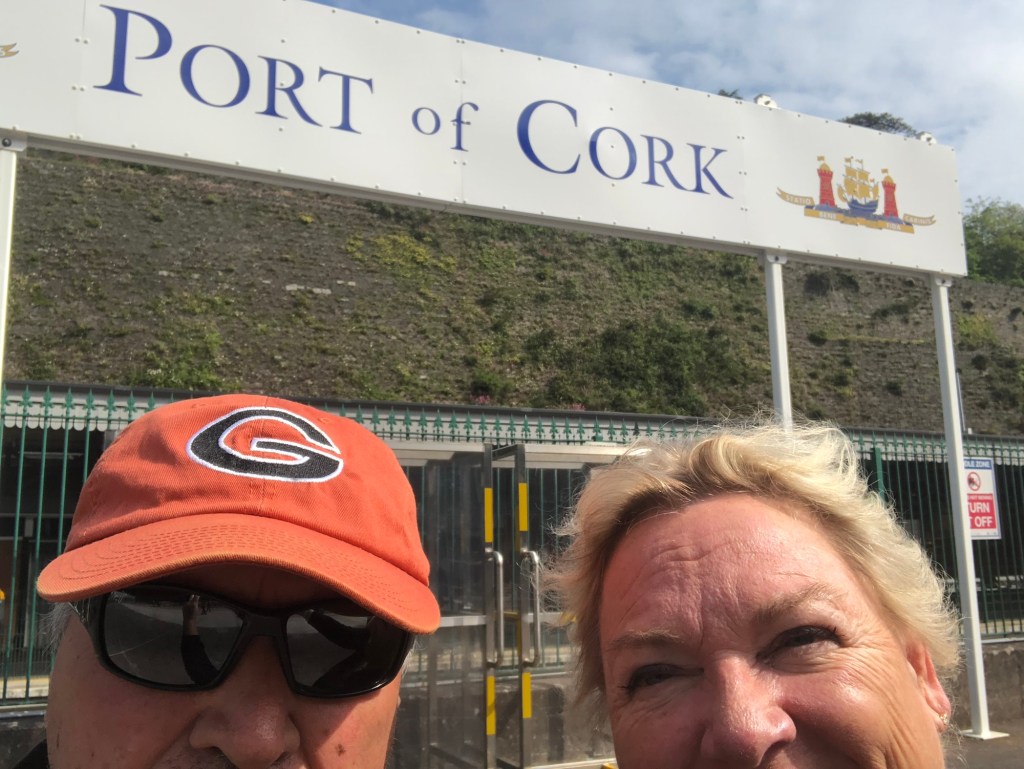
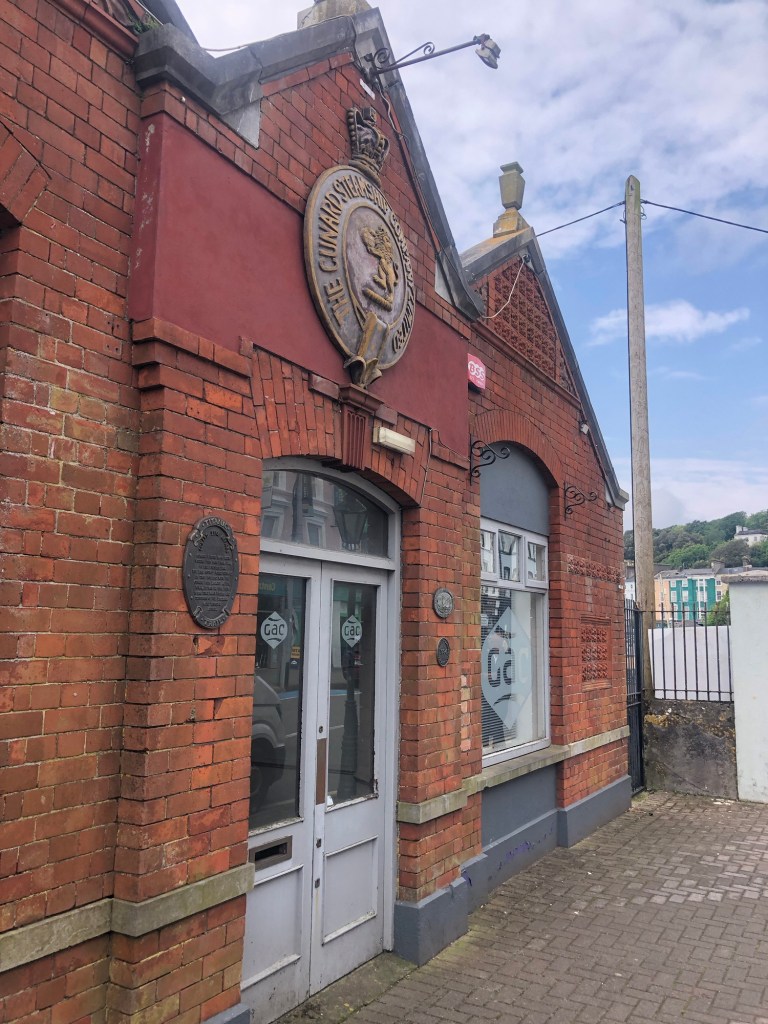
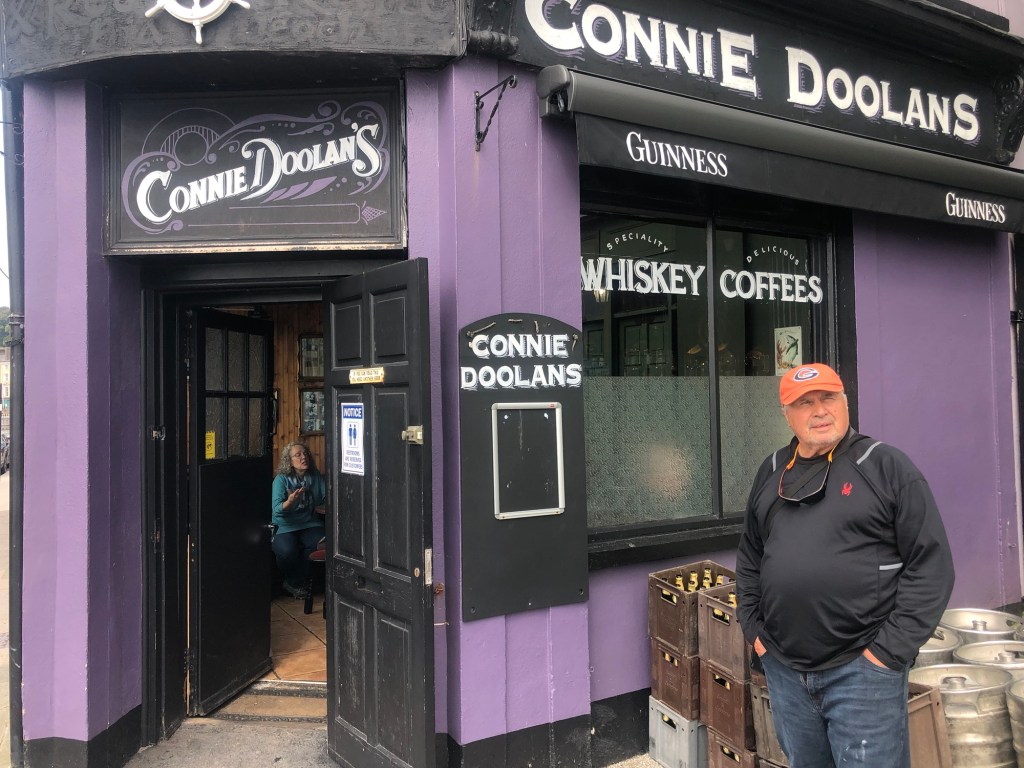
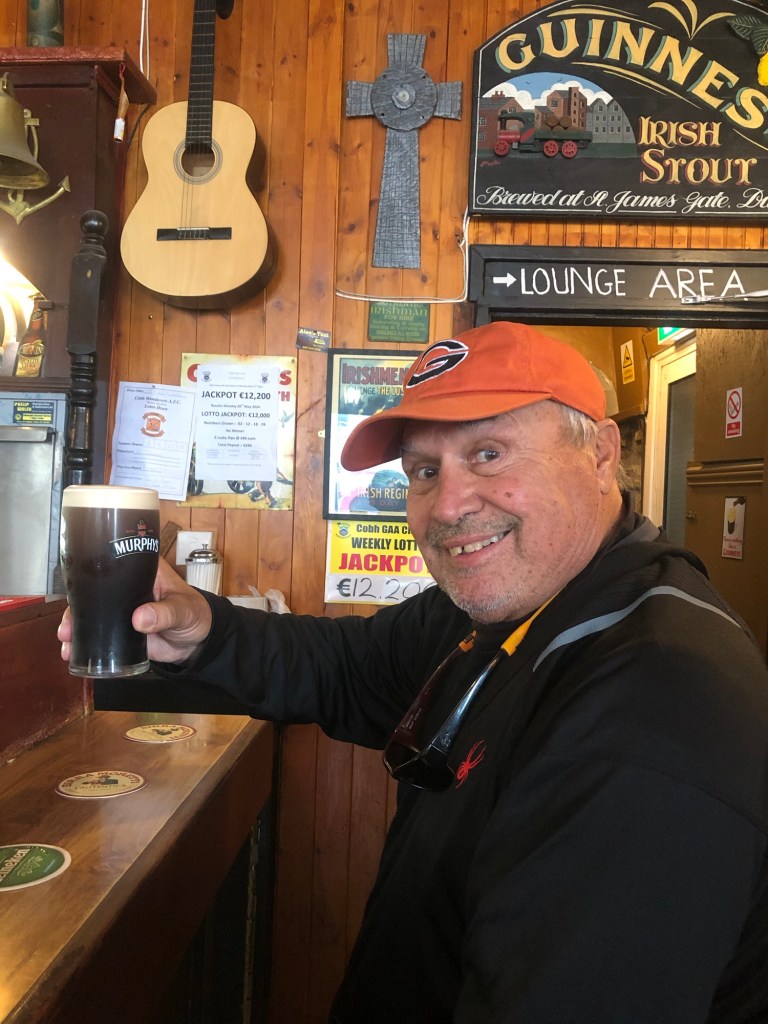
Right at the cruise dock there is the train station and a short walkway to the Main Street. We have a tour booked for noon so we have time to cruise the shopping area. Rudy is looking for a few things and we know (from Googling) that we will find what we need. In addition I find a souvenir shop and pick up a couple of postcards to mail (the post office is right there, too) and of course we find a pub. Not a hard thing to do! As we sip our beers I write out the postcards and then we mail them heading back to the dock where our tour group is meeting. On the way back we pass buskers and the Titanic museum and lots of people as the sun is full on shining and warm. A perfect day. We were prepared for cool rainy weather but it was a great alternative.
We see the cruise line rep holding the sign for our tour to Spike Island and we join the gathering. The guests were asked to meet at 12:15 pm. But there were stragglers and we are told the boat to the island is scheduled for 1 pm. It was a bit of a boondoggle and a gentle reminder why we book our own things. The tours were included in our fare, but it won’t happen again. We have little patience for incompetence and waiting around.
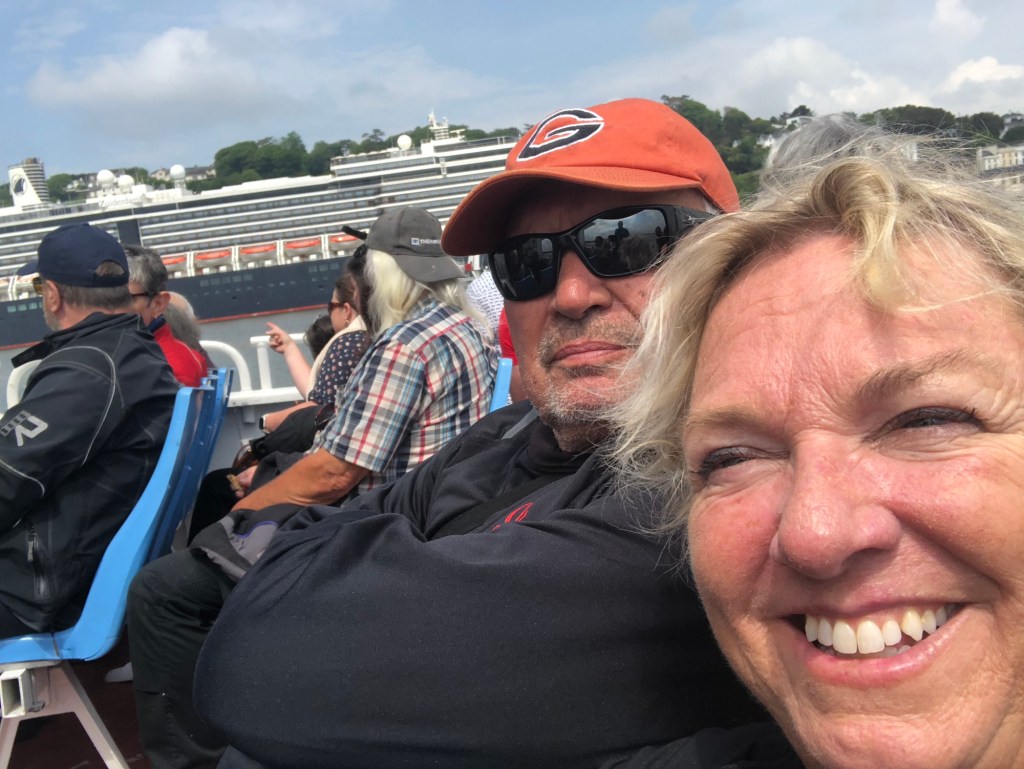
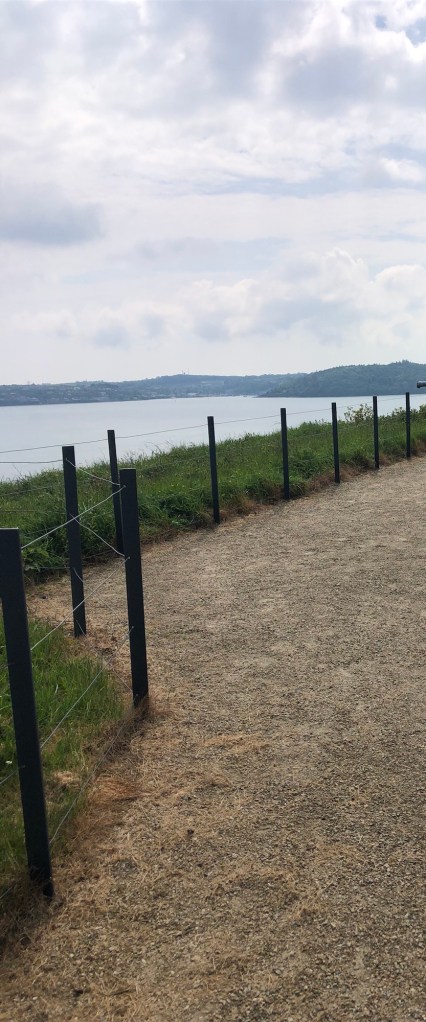
The tour leaves from a dock in town that we passed by twice. Then we realized we could have booked the same excursion on our own. Oh well. It’s a lovely ride out to the island and we take the scenic route as the tide is way out. You can actually see the markings of high tide on the docks and sea walls. The views as we pull away from shore are really superb.
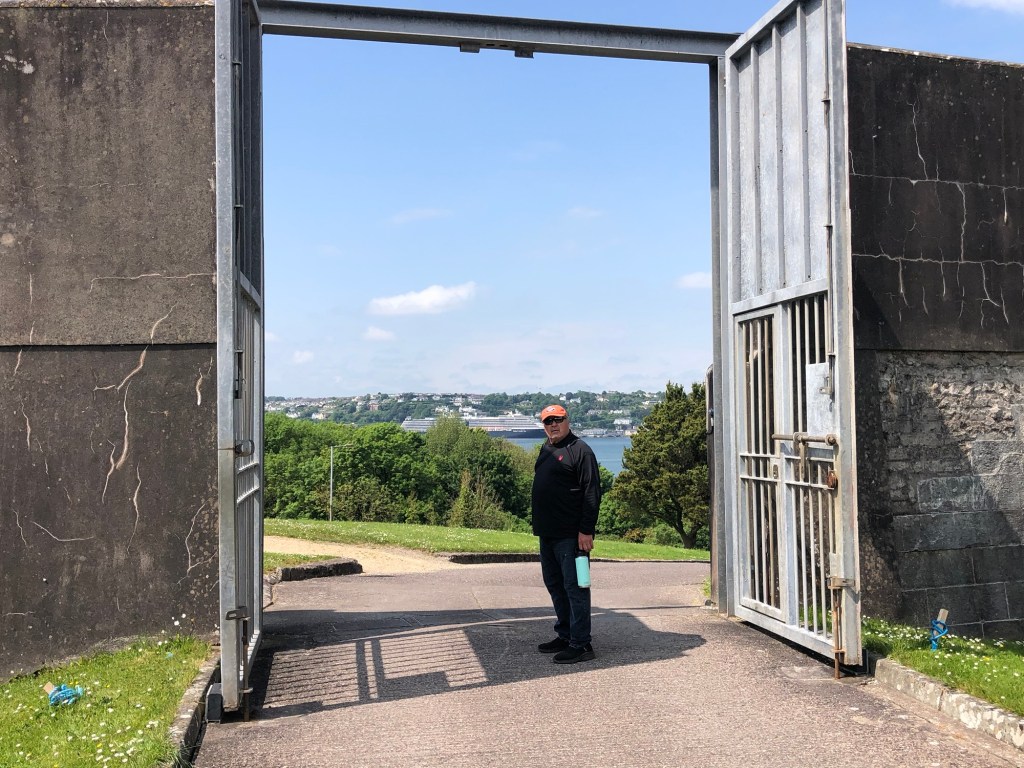
When we dock at Spike Island, our tour guide Paul, explains that there is a fairly strenuous hike to the fortress/prison and since it’s quite warm we are cautioned to hydrate. There’s about 20 people in our group and some of the ladies are wearing dressy clothes and shoes. Not exactly hiking gear! There’s a paved road leading from the dock up to the fortress and we can see it’s a way up. Paul the guide stops intermittently to tell us things about the history. It’s very interesting.
Firstly, all of the signs are written in English and Celtic. Celtic is actually the native language but since the British ruled Ireland for several hundred years, English became the norm. However Celtic is taught in schools and is used by some. There’s definitely a fierce Irish pride and disdain for the British. Ireland was liberated but the Cork harbour (a strategic military base) was not included along with two other Irish harbours. However, the Irish government convinced Britain to release the harbours in 1938. This was a key step in allowing Ireland to remain neutral during WWII. The Republic of Ireland refused join Britain in the war.
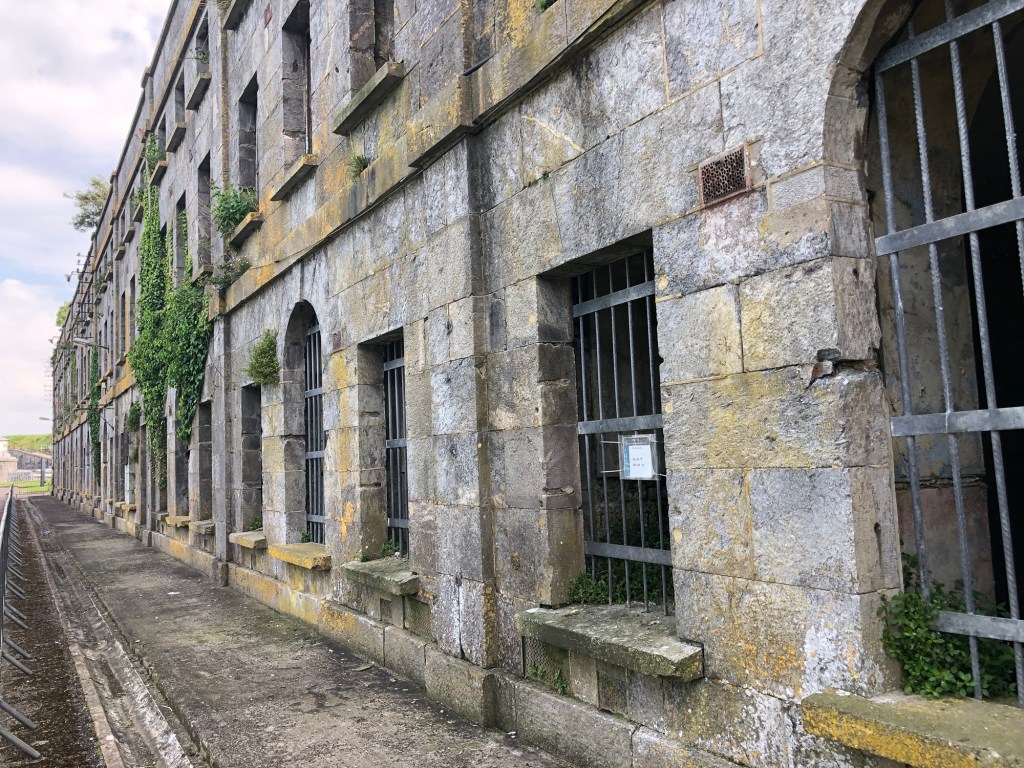
Spike Island with its military advantage was used as a Fort. However, with Britain controlling the entire area, they deemed it more appropriate to use as a prison and so it housed those who rebelled against British rule and were arrested. There were some 4000 prisoners at one time. Then Britain felt threatened by Napoleon and it was decided that the prison be turned into a fortress. A military engineer designed the fortress and the prisoners were used as labourers. Since muskets were used in battle, provisions were made to accommodate them. The prisoners were worked to death and most of them died during the several decades it took to build the fort. Of course, as history would show, there would never be an attack on it.
On the winding road to the top, Paul stops to tell us about the
When Ireland was liberated and the British military removed, the Fort remained empty. However, unrest with Northern Ireland created a need for a young offender prison (the youth were initially jailed with the adults and were corrupted by them!) and it was decided to turn the Fort into a prison once again. About 120 youth offenders were imprisoned there but in 1985 a riot erupted where the prisoners set buildings on fire and laid siege to the tower. The guards retreated and called for help. The event became nationally televised and ended when one of the prisoners mom came on the scene and her son surrendered followed by his comrades.
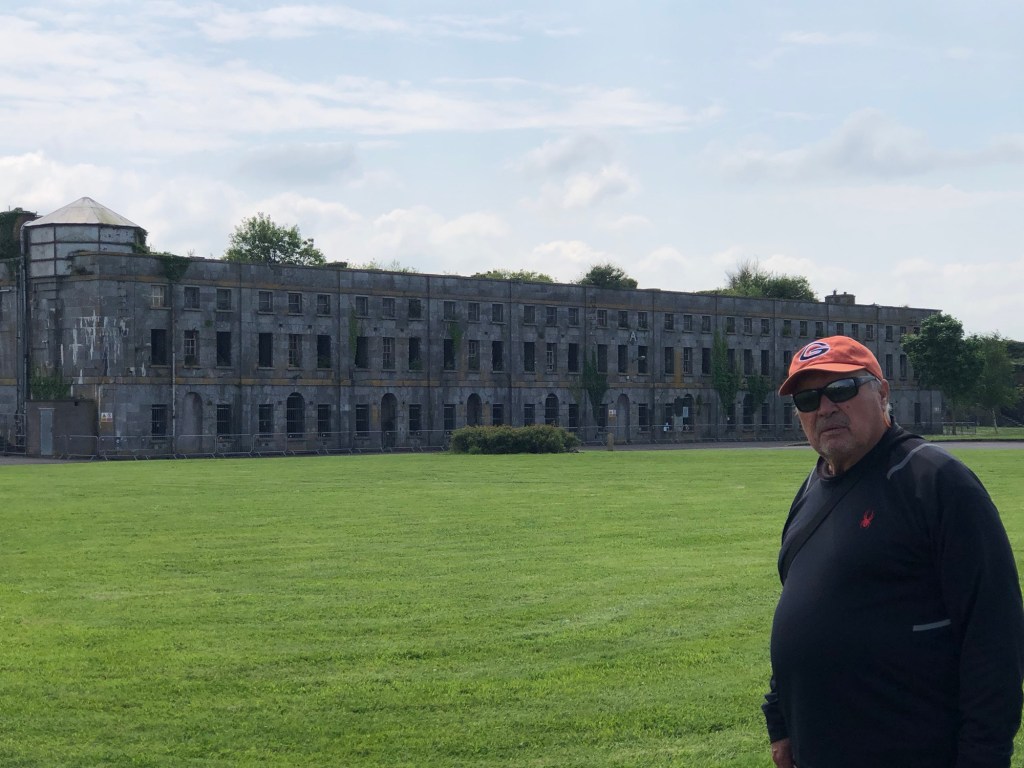
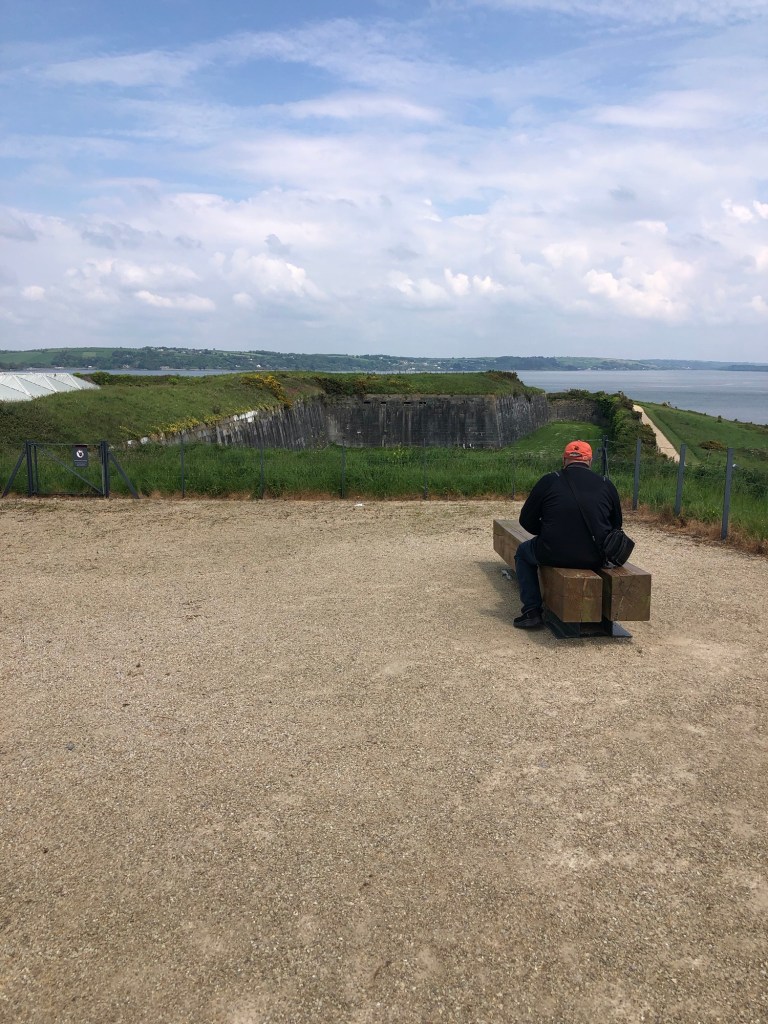
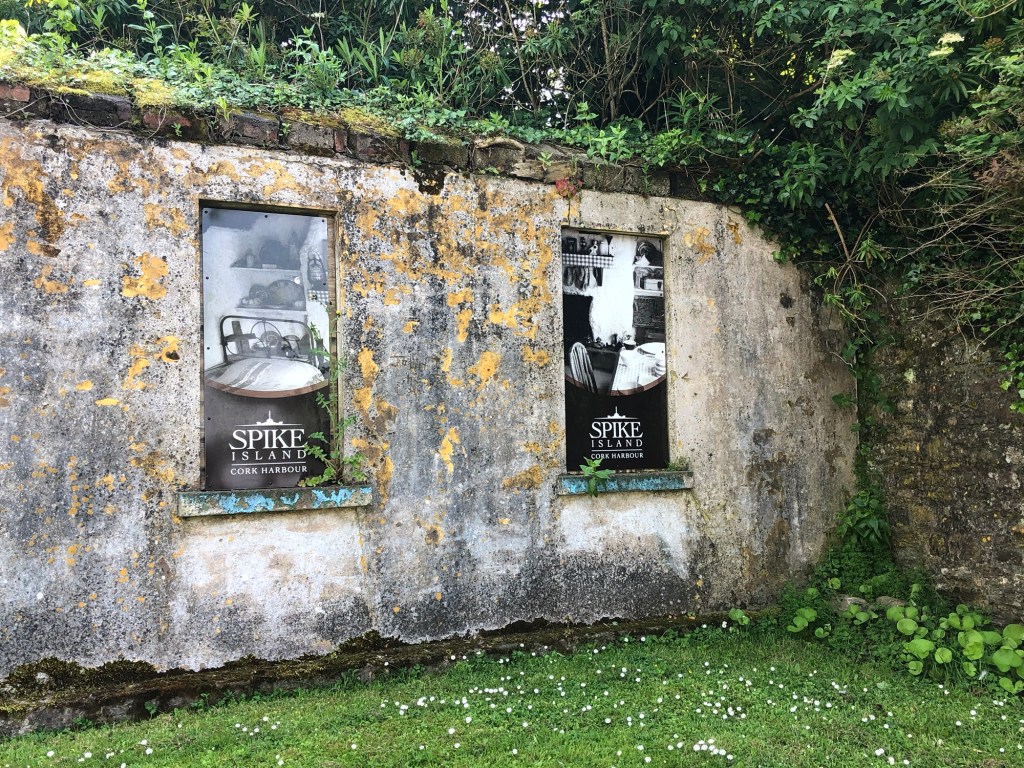
Now the Fort/prison is a 120 acre historic site. It’s amazing to see the work of the prisoners and the fortress they created. Now it’s a shell and the burnt buildings are a giant pigeon coop. The grounds are lovely and well kept. Definitely worth the visit.
Back on board our cruise ship, the sky suddenly turns gray and then the rain starts in buckets. We missed it by an inch!!











 Retiring at the Speed of Life