
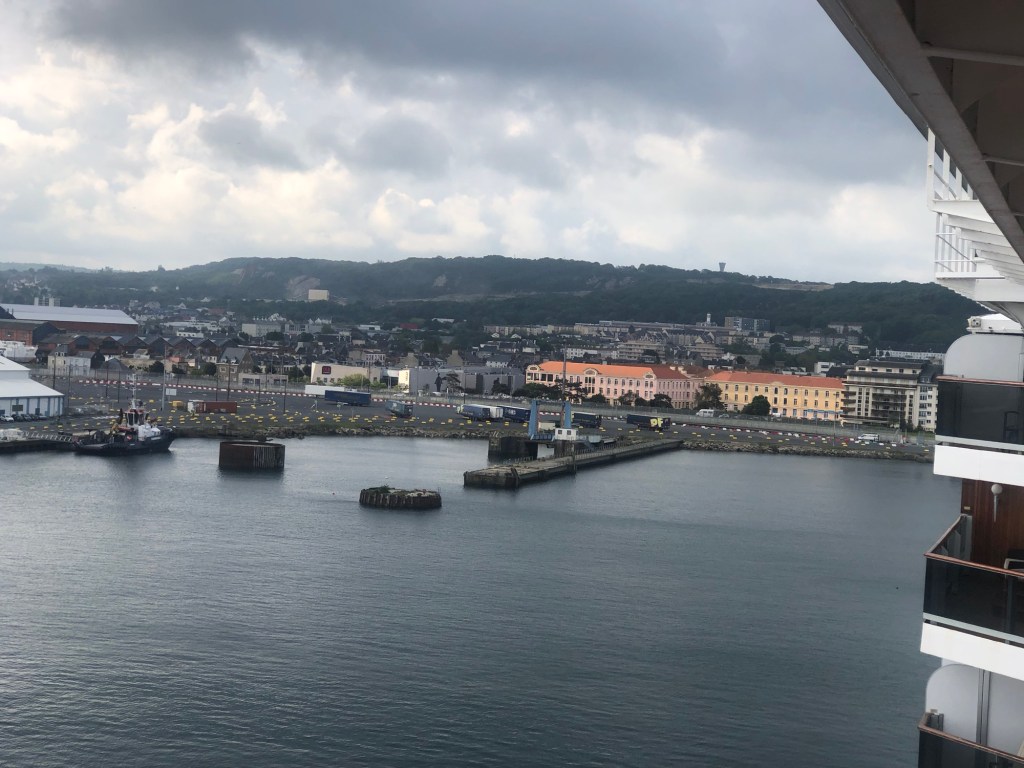
Today we docked in Cherbourg harbour in the Normandy Region. Another quaint seaside town with an abundance of history and charm. Weather was 67F and slightly overcast with the sun trying to peek through.
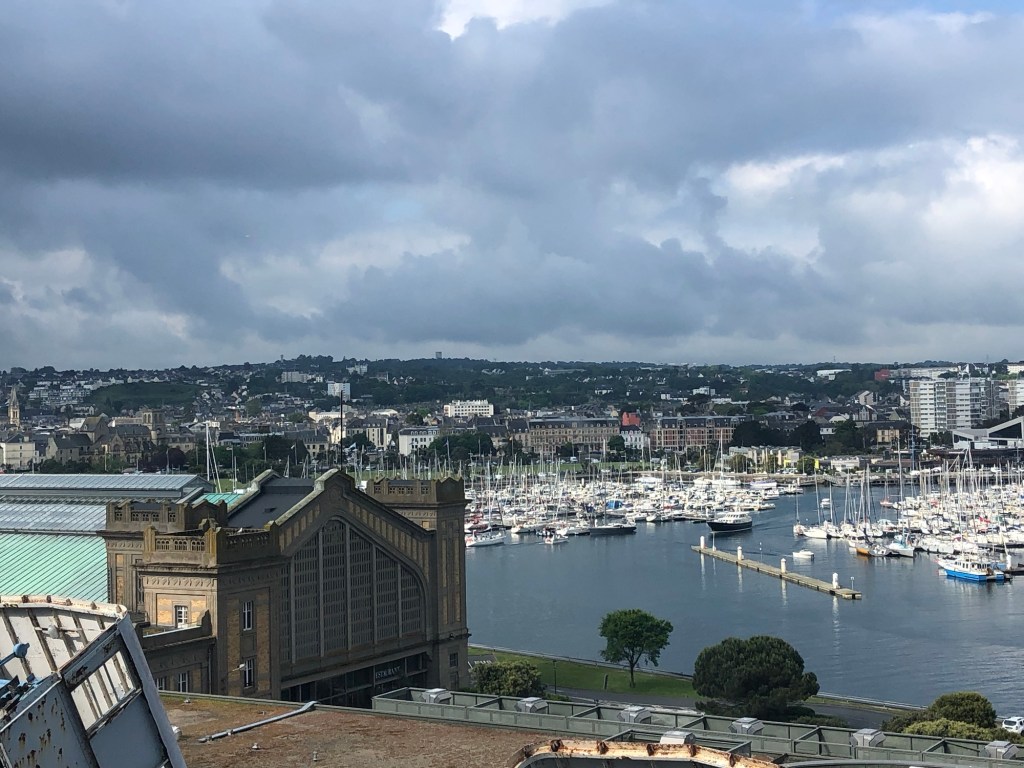
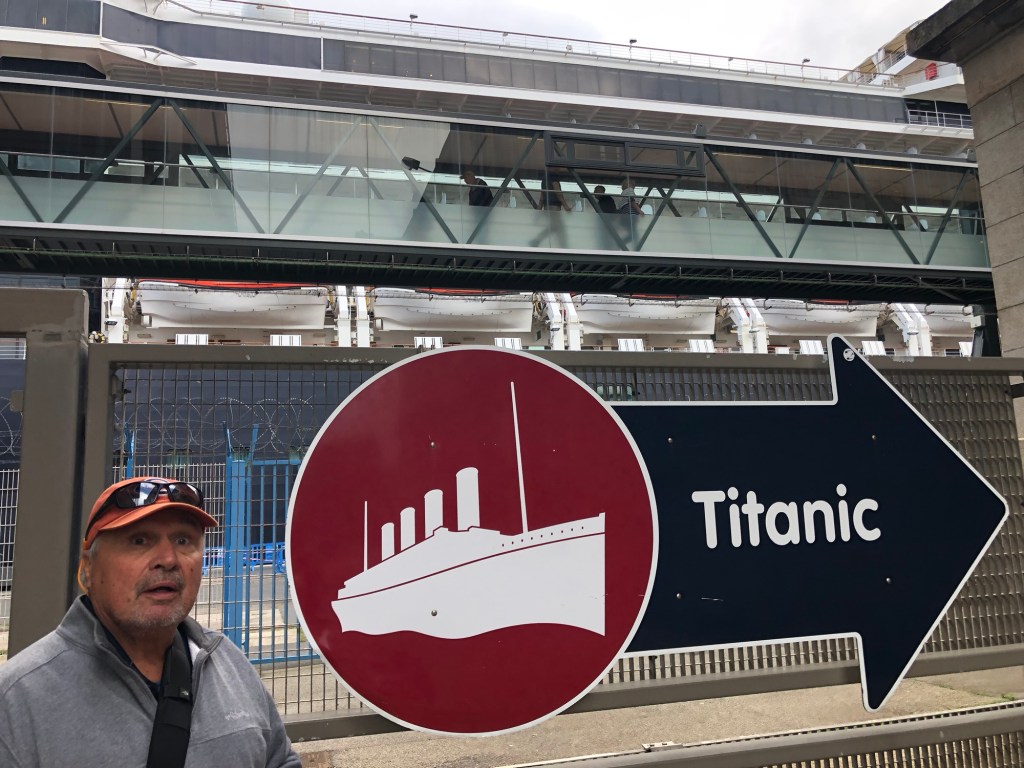
The boat docking area is unique itself as it was another Titanic stop and a key strategic military point during WWII. It’s within an easy drive or train ride to the famous beaches of Normandy and other historical war sites. As you disembark into the terminal you see the huge building that once housed the train and port facilities. The train is no longer there, and now cruise ships dock rather than the large ships transporting immigrants. They’ve converted the back of the building into an amazing water themed museum which we visited.
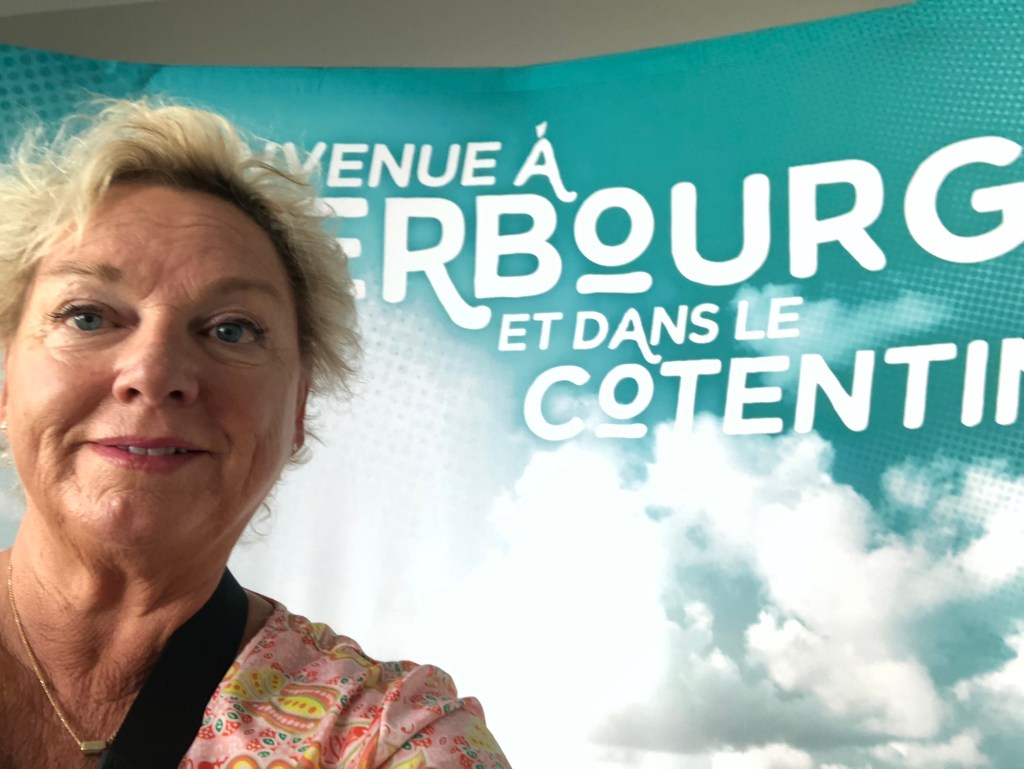
At the outside of the building only cruise passengers and staff are allowed to catch a special bus into town. The area is otherwise restricted to visitors. There’s a small souvenirs shop and welcome sign.
Our plan was to catch the bus into town then return to enter the museum. But due to pending rain we decided to reverse our plan and see the museum first. it is adjacent to the boat terminal. On our France trip in 2022 we visited the Normandy war sites, so this time we decided to stay local.
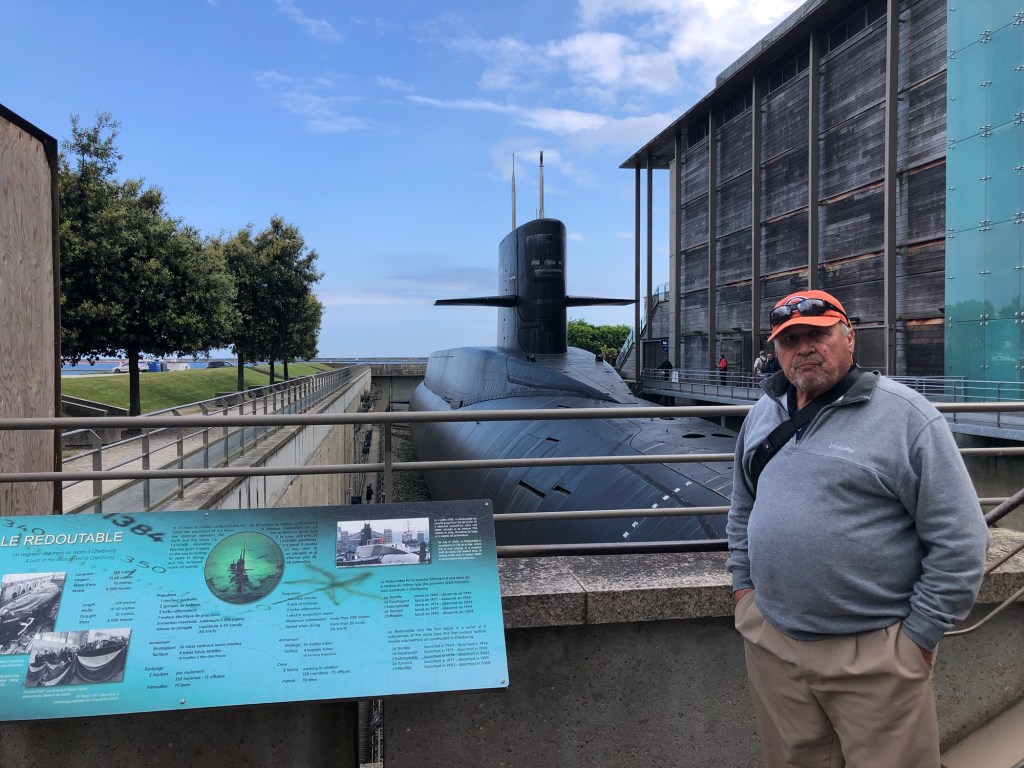
The Sea Museum – Cite de la Mer features three sections: atomic submarine operations and tour of an actual nuclear submarine, Titanic interactive and displays and finally the eco ocean themed area. We only had time for two so we chose the Titanic and sub areas. They did not disappoint.
We started with the Titanic exhibits. It’s a large interactive walk through with artifacts, staged examples, and a minute by minute enactment of the final three days of the fateful voyage. When you enter, there’s a viewing area with a floor to ceiling panoramic bow view of the Atlantic Ocean as someone on the front of the ship would have seen. The screen intermittently shows quotes of passengers and crew. It also shows a countdown timer. It’s eerie how calm the water was and how clear the skies were. Then, on April 14 the officers notice more icebergs which is by all accounts rare for that late in the spring. Late that night, a huge iceberg appears. You watch how the ship attempts to turn but is not successful and it shudders as it rams the massive ice formation twice as it rebounds. Thereafter, you hear creaking, groaning and frantic Morse code messages to nearby vessels. Finally, in the early morning hours of April 15, the unthinkable occurs and the behemoth ship sinks. Some passengers were able to escape in life boats but most perished. It was a sobering exhibit.
Moving on there were reenactment clips of survivors detailing the escape experience. Recounting how the lifeboats were full and those in the water trying to climb aboard were beat down by oars, those on board fearful that the boat would capsize. Horror stories of floating debris and shocked survivors freezing and rowing until they were finally rescued by the Carpathia.
In another exhibit you can try your skills at Morse code. There’s a signal switch used to tap out messages. It was the only means of communication at that time.
As you walk from area to area there are newspaper clippings. The Titanic was the news of the day both before and after it sank. There is a hologram of the recreation facility featuring a stationary bike and rowing machines. There’s displays of the accommodations on board: one side shows the cabins and the other a lifelike view from the room moving waves and all. One of the saddest parts was the area showing the recovered items and the underwater scenes.
The entire tour was very well done with clever and thoughtful scenes to take you back to the time period.
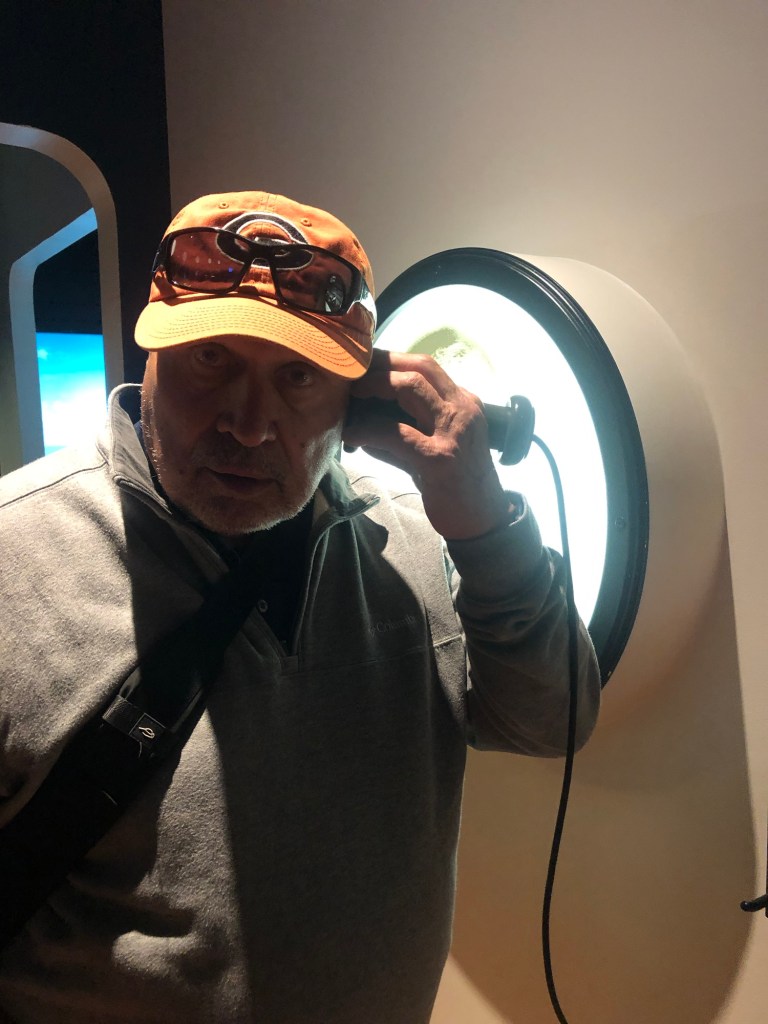
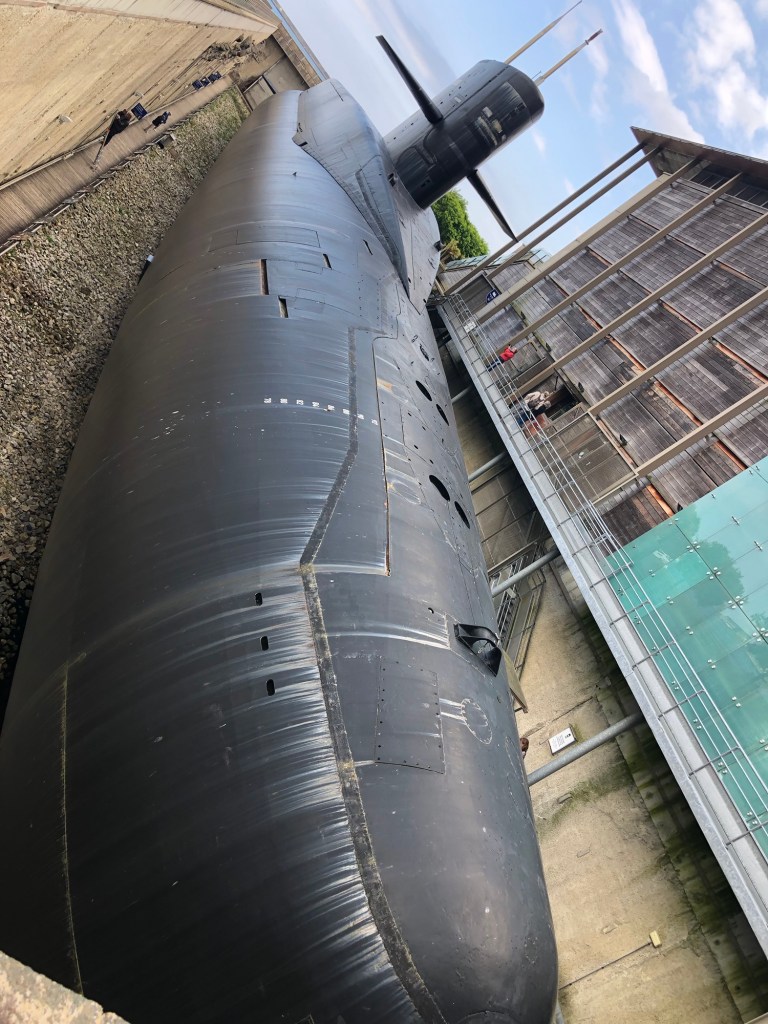
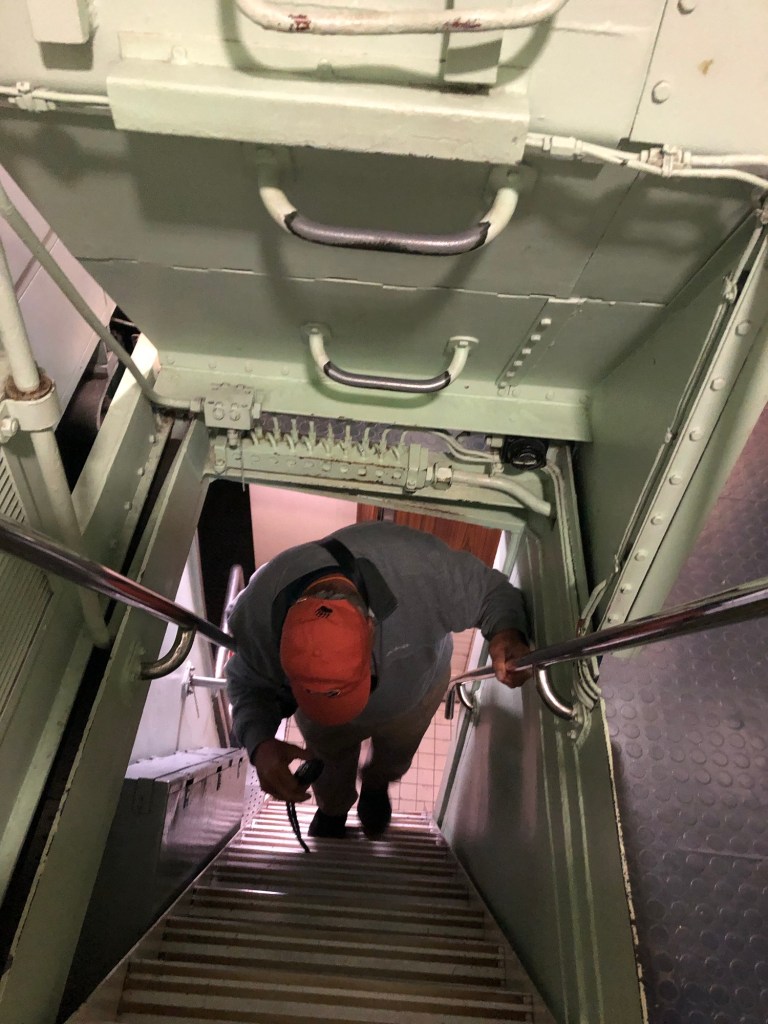
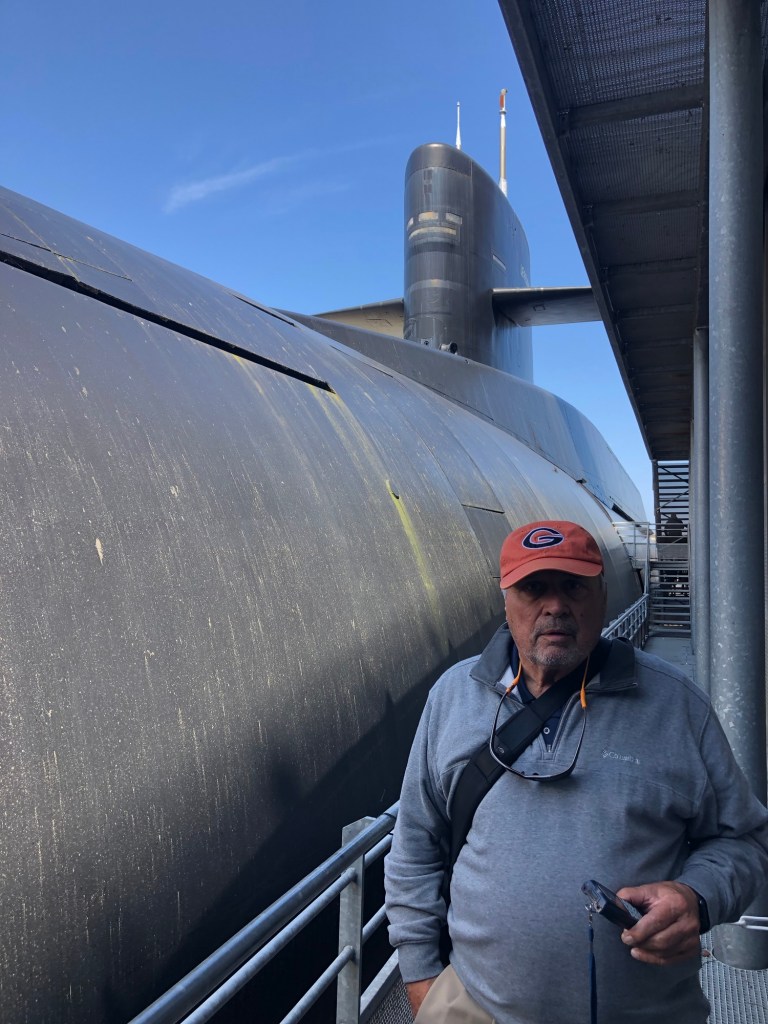
The next area was the submarine section. There were displays of more modern submersibles, but the main attraction was the real nuclear sub. Before you got to that part of the museum, you could learn about sun operations and try your skills with mapping positions underwater and even operating a sub mission (I flunked). A very useful start to the final piece: touring an actual nuclear sub. You are given a small phone on a strap. There are several languages available to choose from. You walk outside to the starting point and press 1 on the phone and listen. Suddenly a Captain’s voice starts the tour. And you go down the stairs to enter the sub.
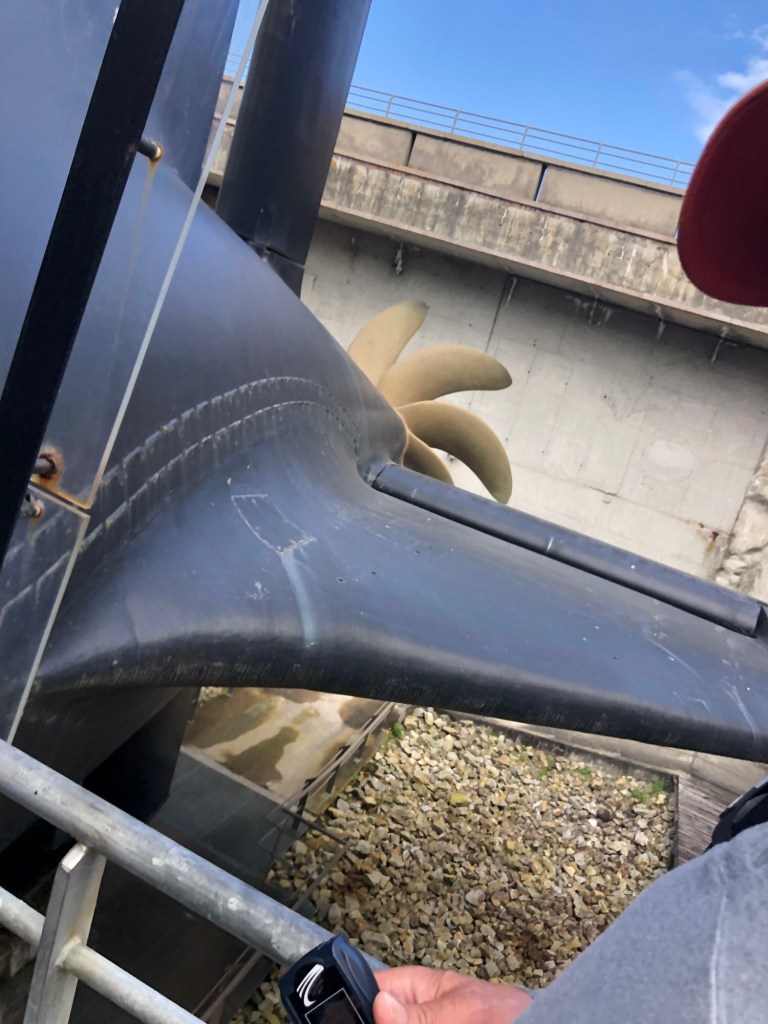
We’ve all seen movies about submarines, but this real life version was super interesting. The captain leads you through all areas of the sun including the nuclear power area, officer’s quarters, crew quarters, heads, mess, engine room, operations room, infirmary, missile storage and launch centre, periscope and communications facilities and water supply systems. To make it more realistic, there were typical sounds and lights projected along the way. Totally cool.
This museum, in my view, is a must see. We could have spent way more time there but also wanted to see a bit of town. And by the time we emerged from the museum it was sunny and warm.
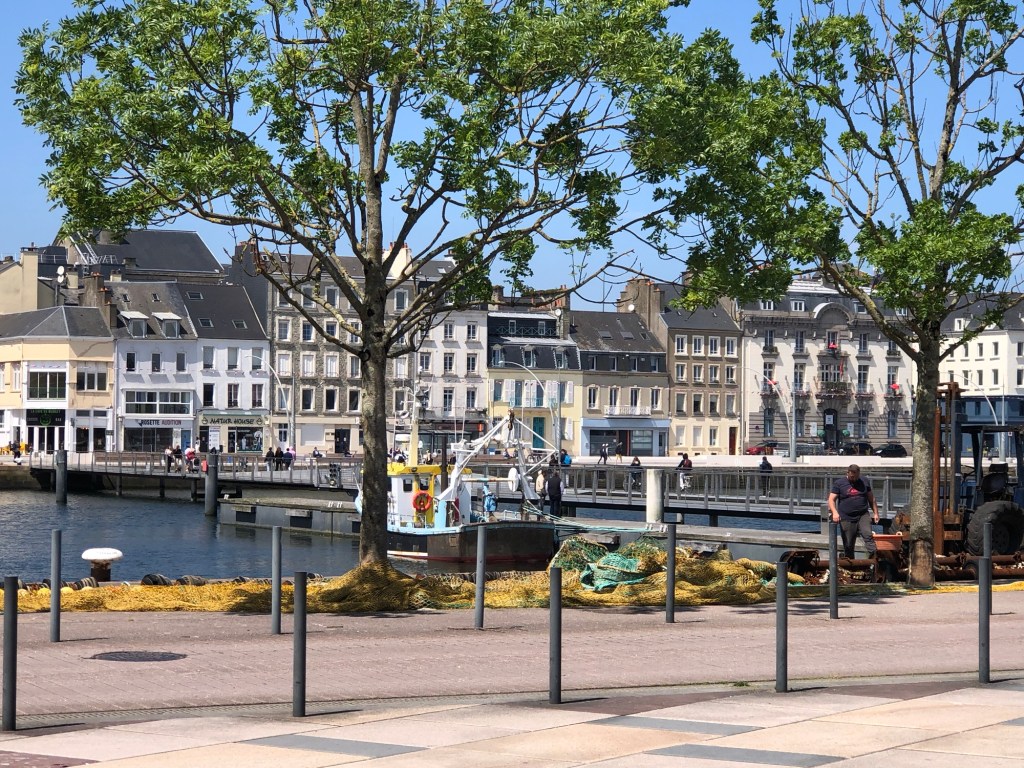
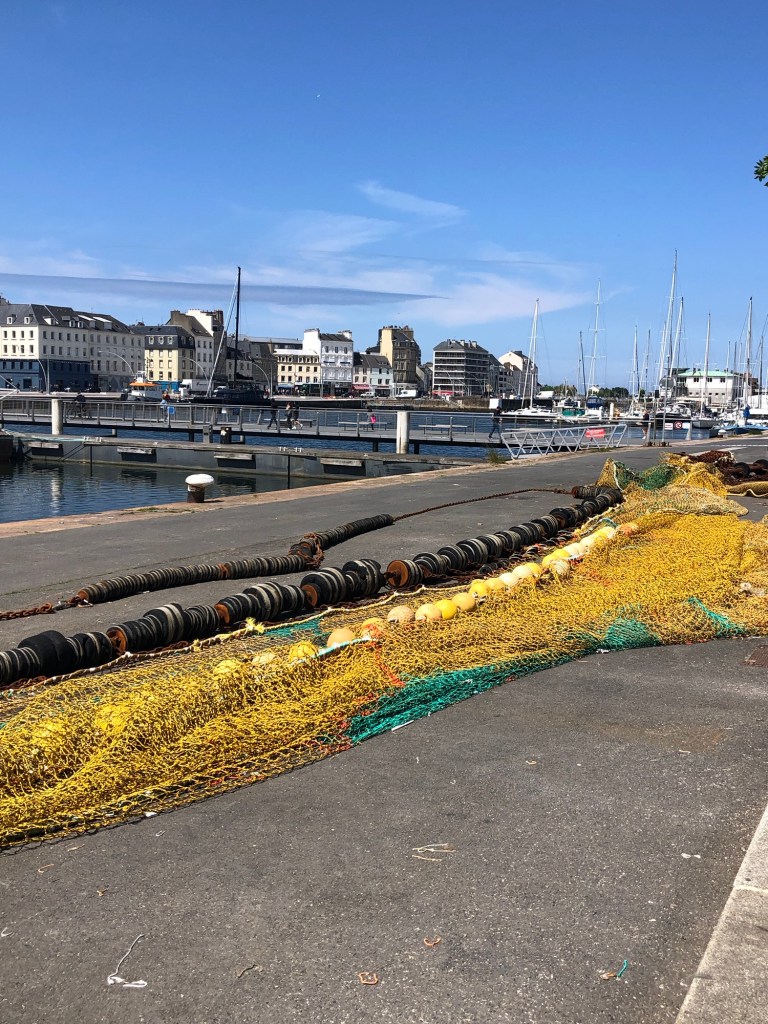
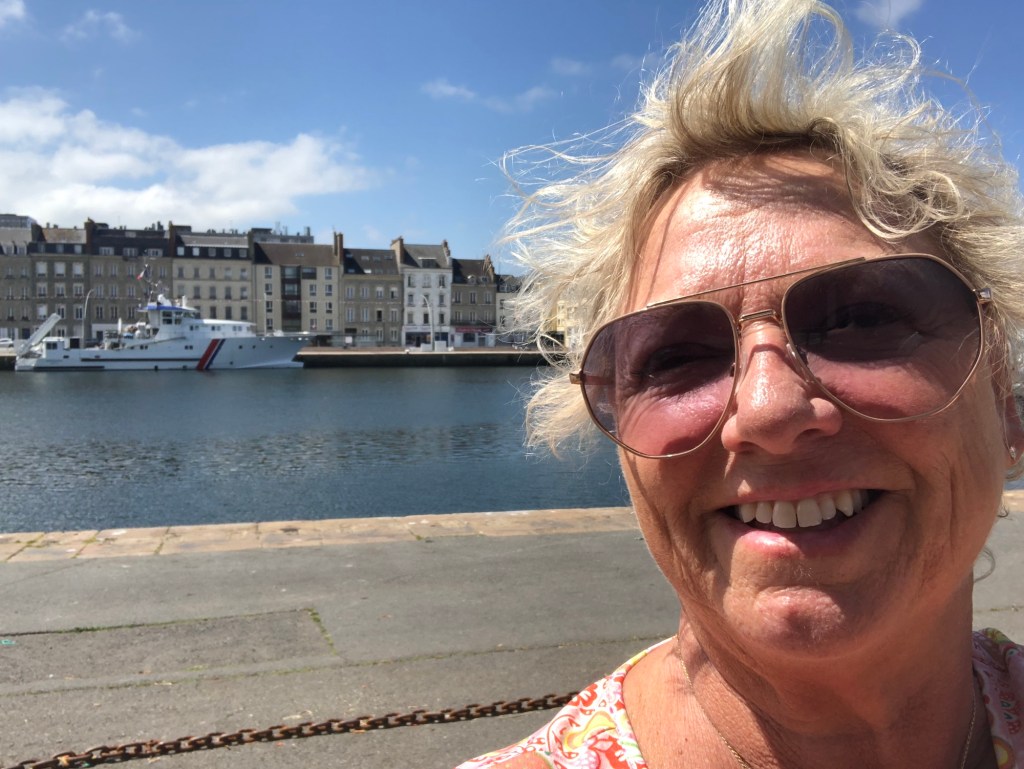
We catch the bus into town and there are a few drop off spots. It’s not a huge area. There’s a lovely marina and beautiful architecture both historical and modern. Somehow the blend works very well. We stop for a latte and break. Do a big of shopping and return by bus to the cruise ship.
Au revoir, Cherbourg! A la prochaine 💗





 Retiring at the Speed of Life