
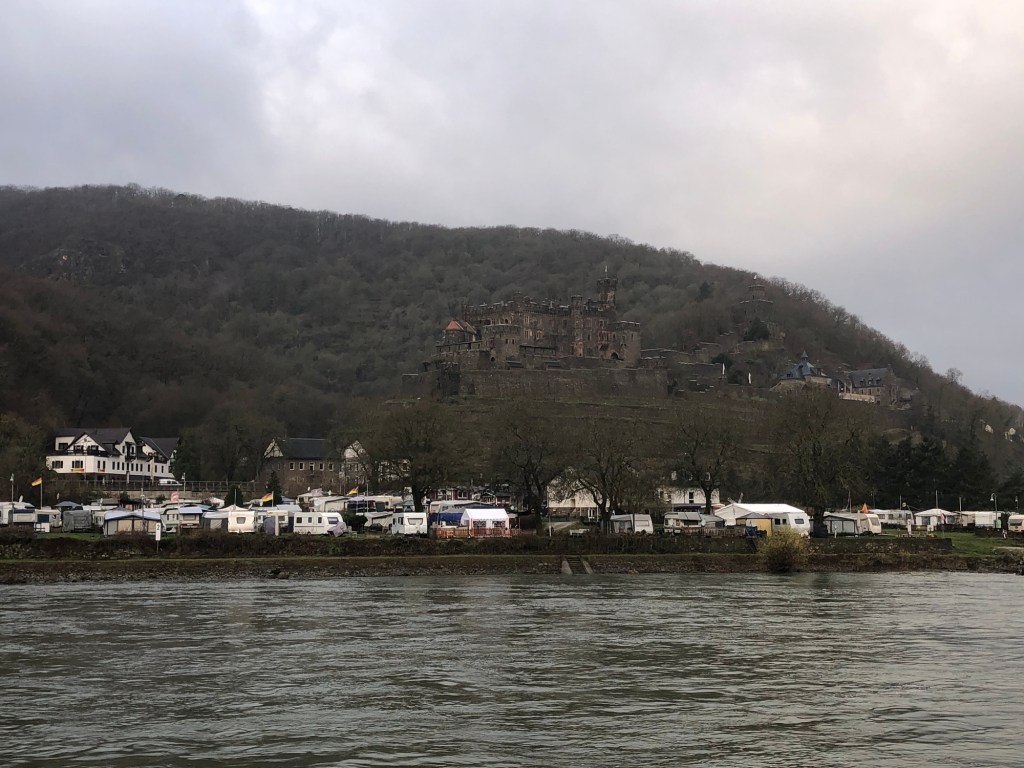
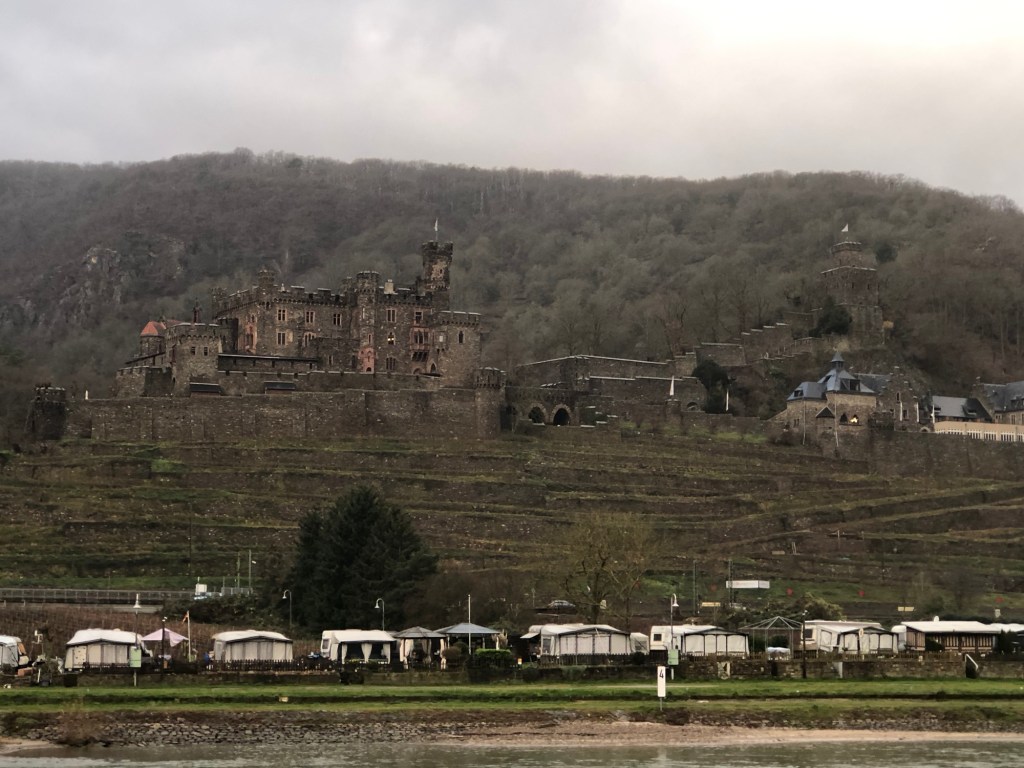
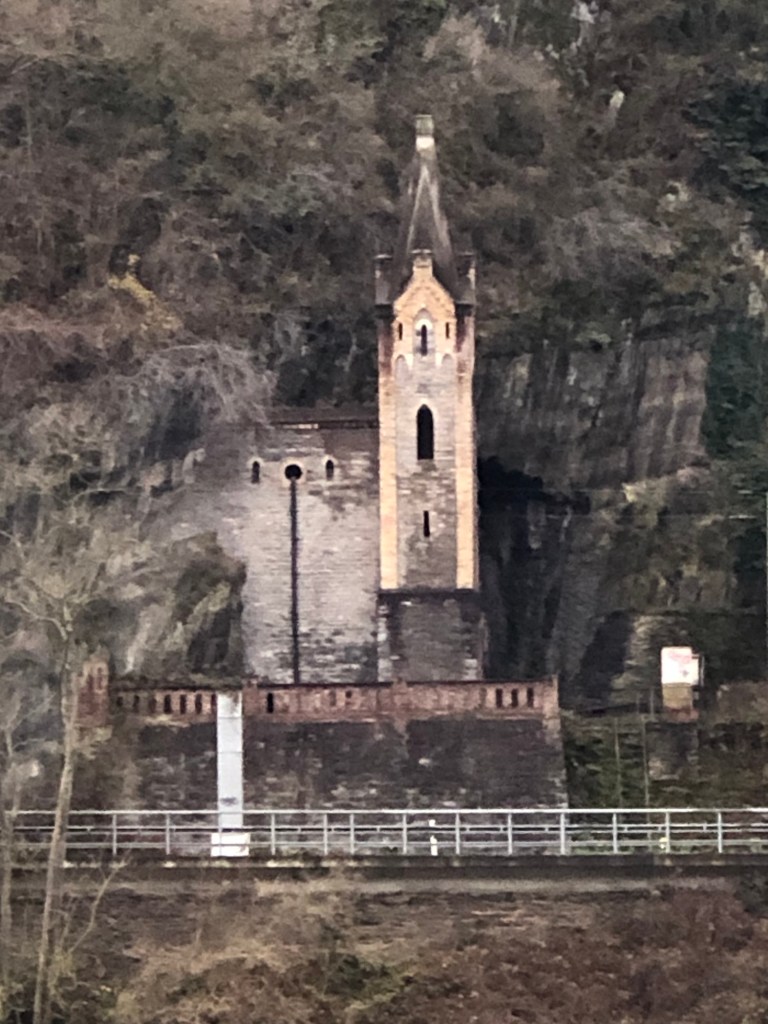
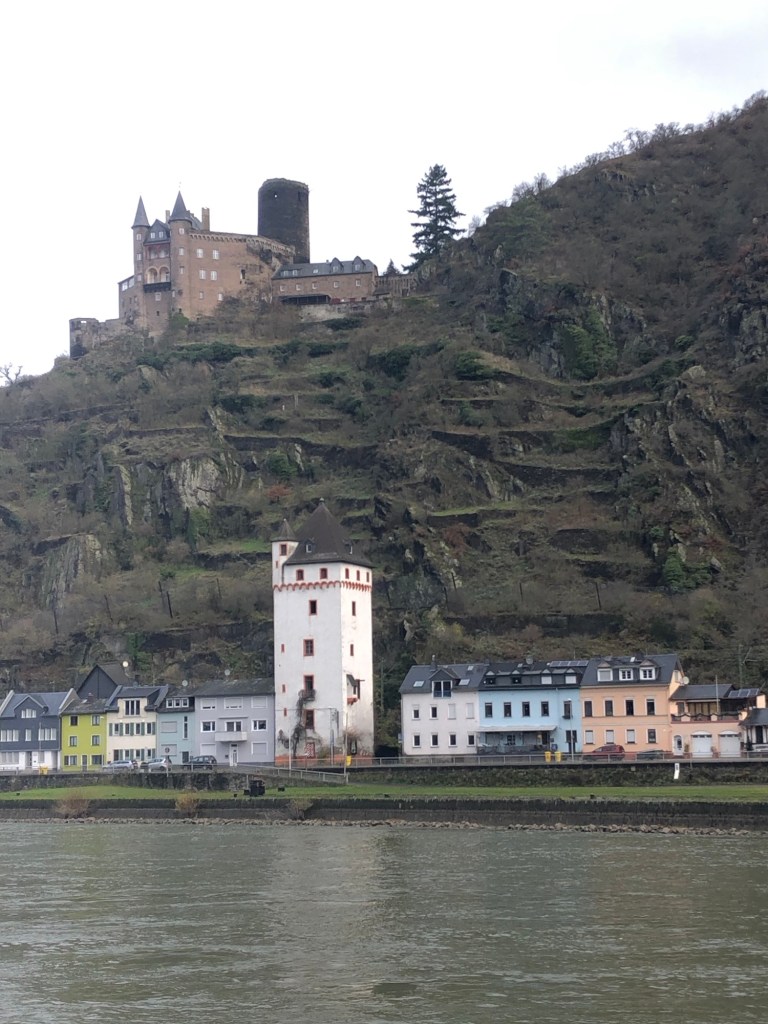
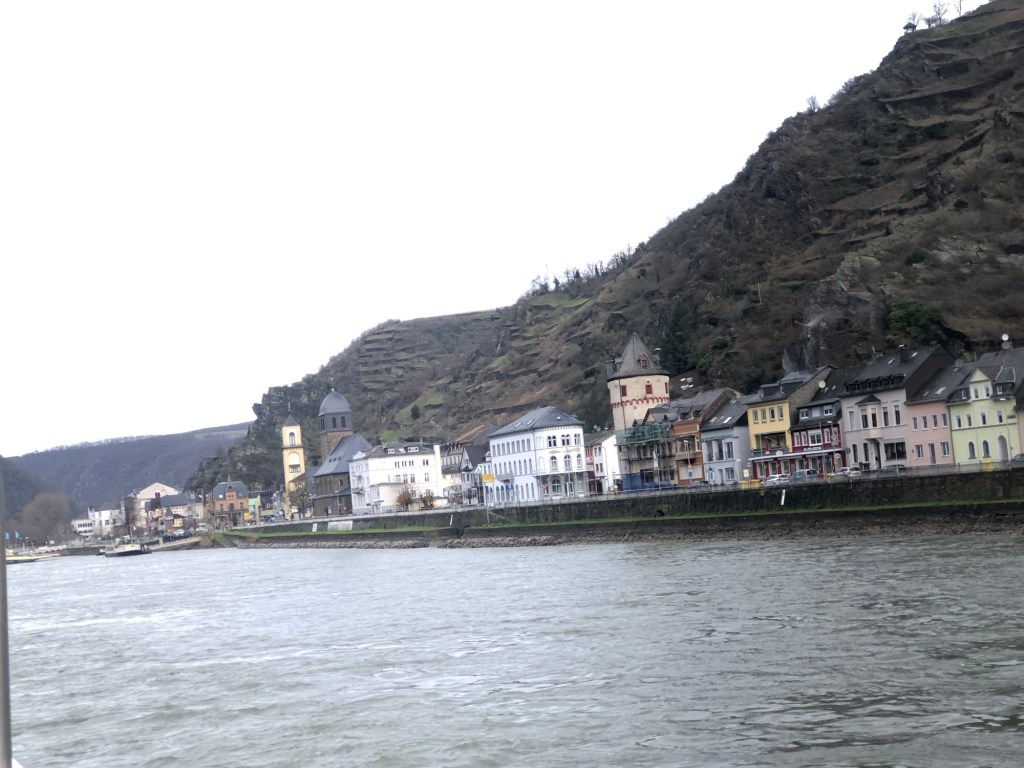
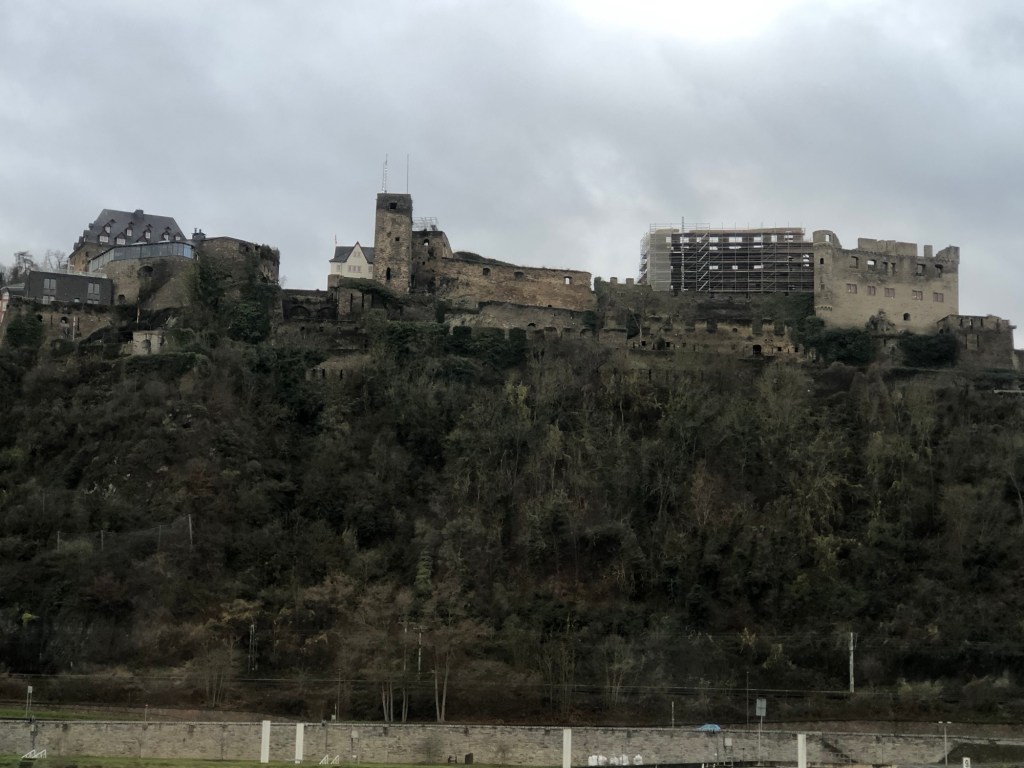
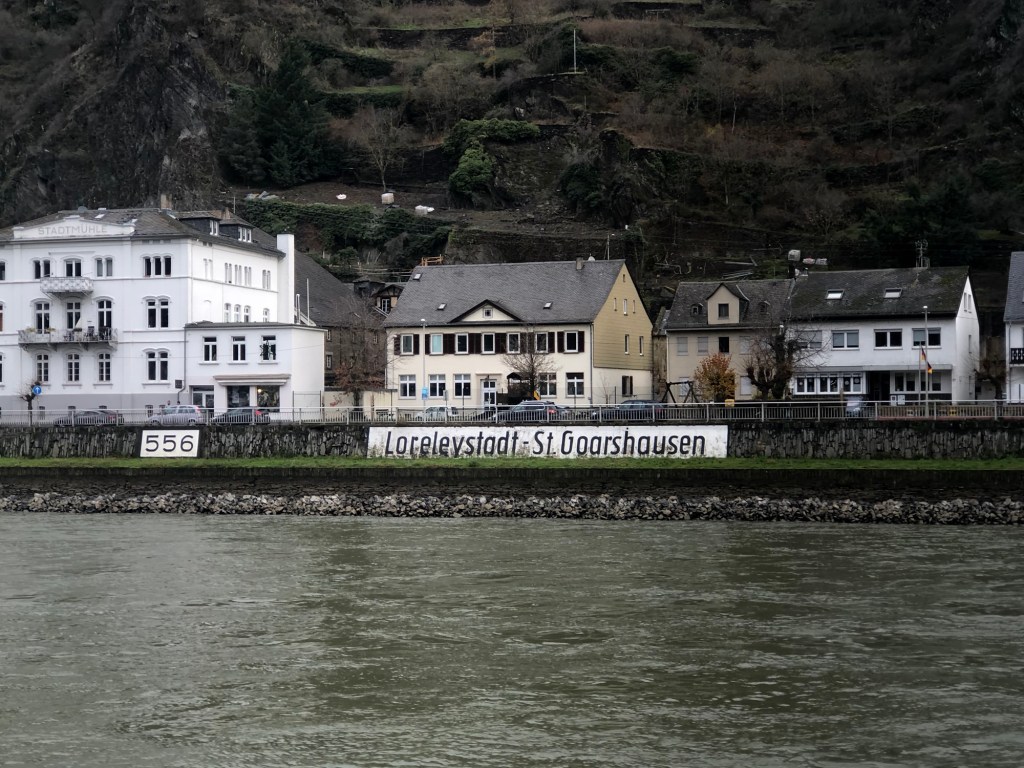
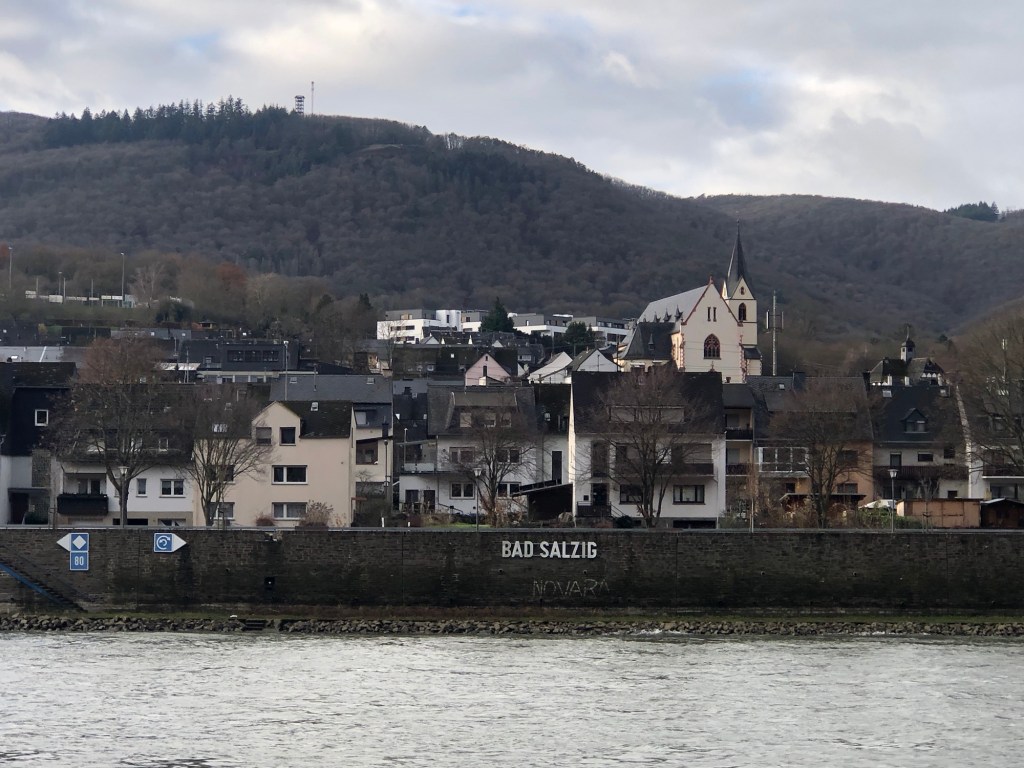
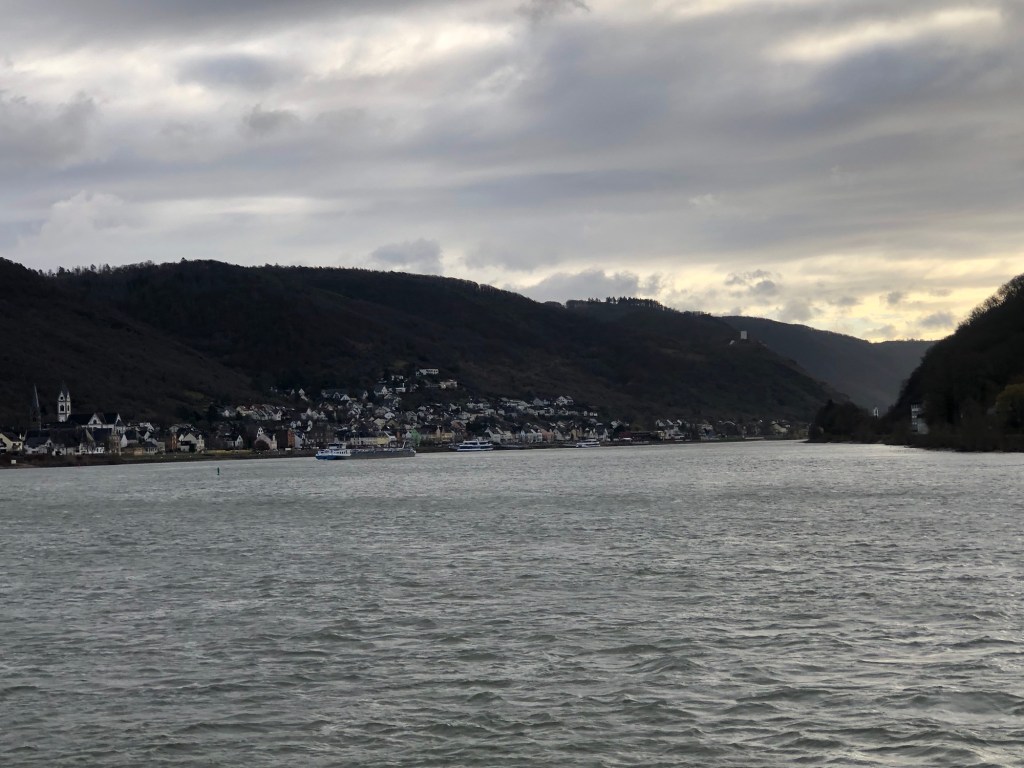
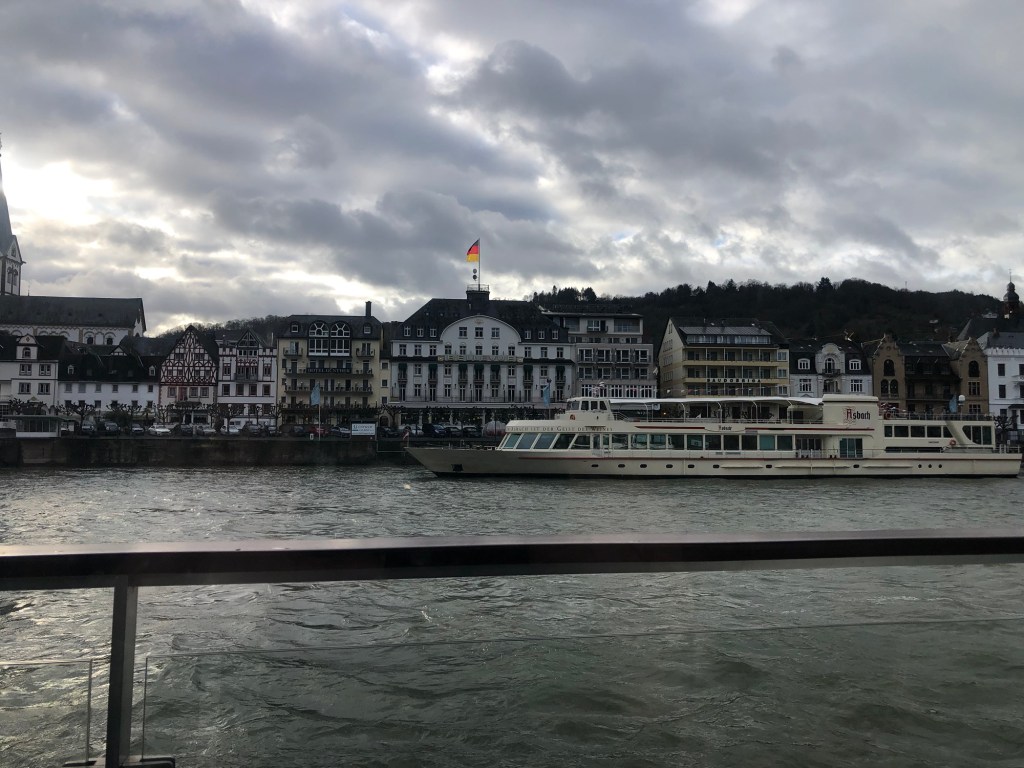
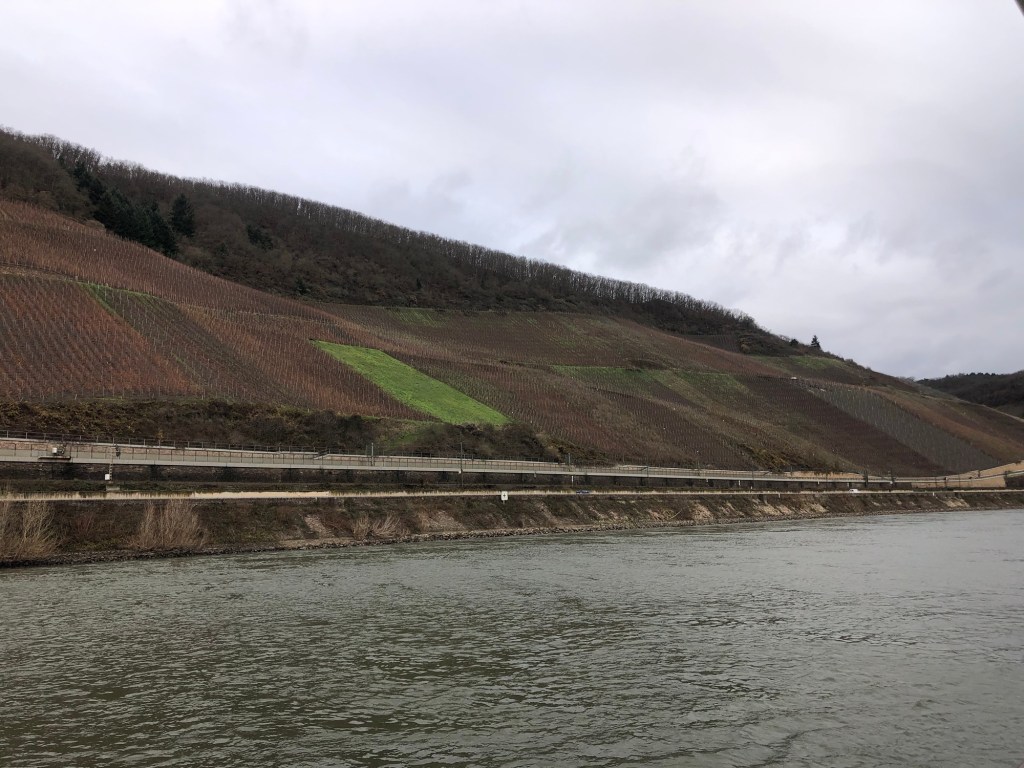
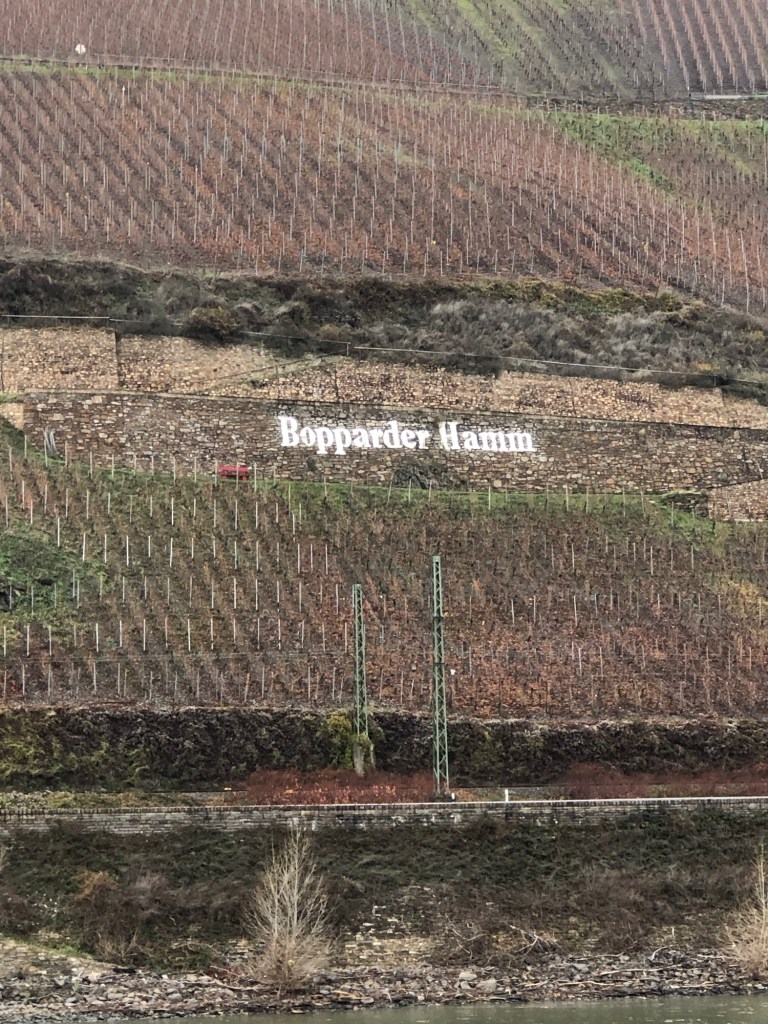
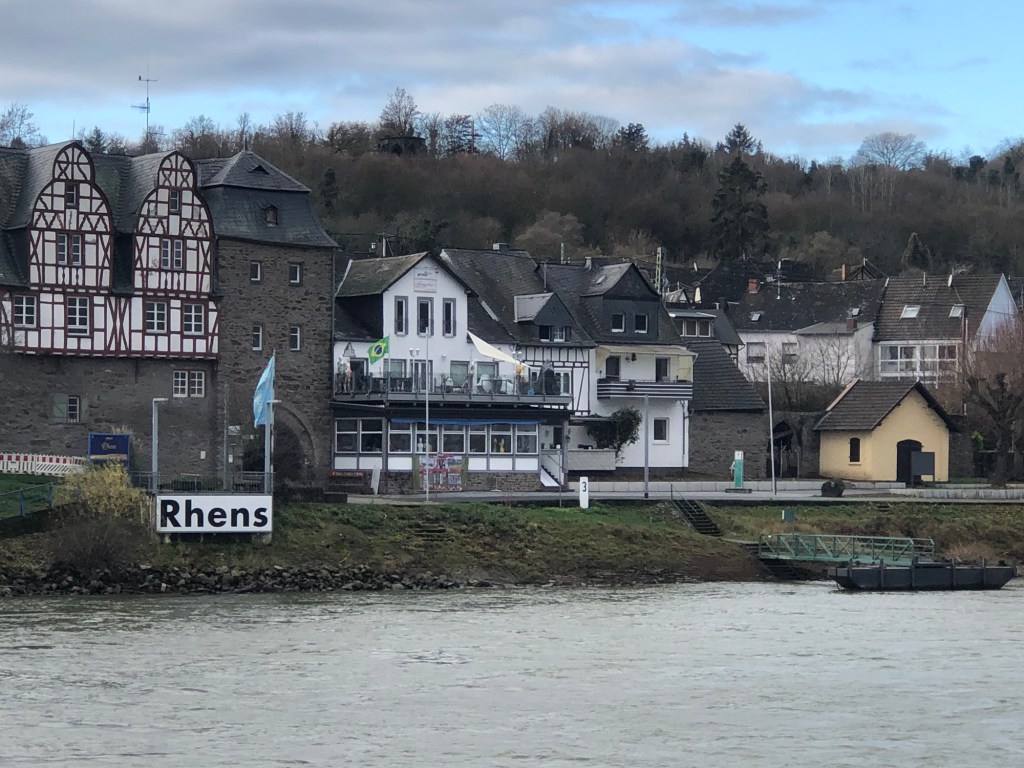
Our day started with a scenic cruise along the Middle Rhine. There were amazing sites to see on both sides of the ship, but we stayed in our (warm) cabin and were awed.
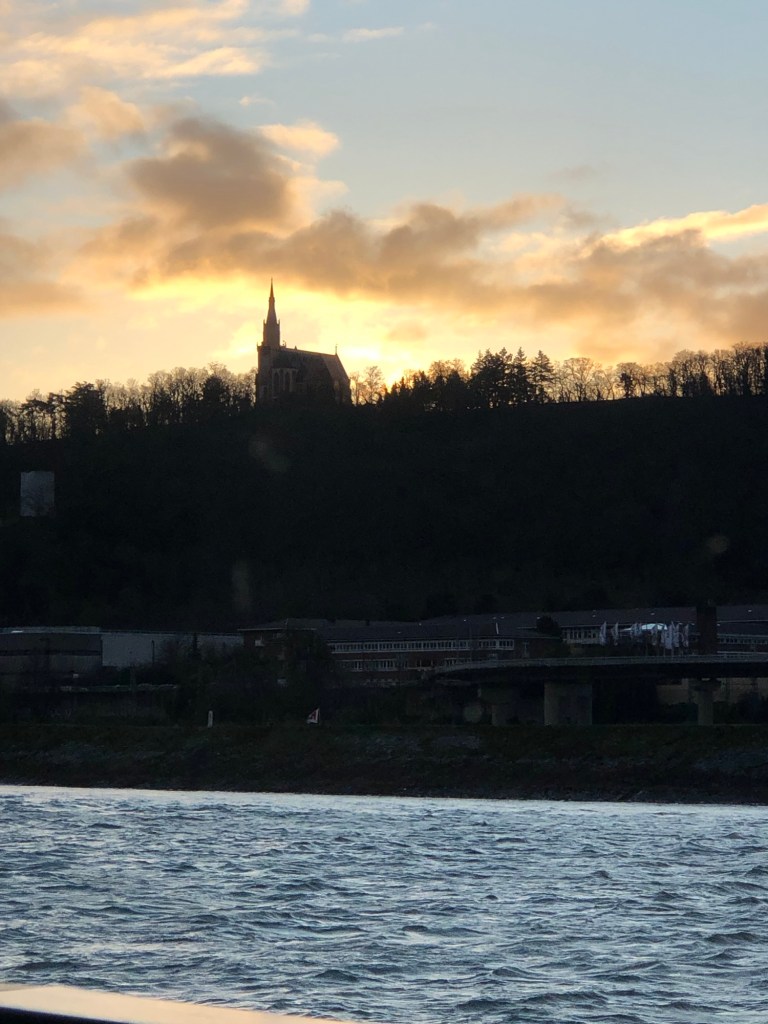

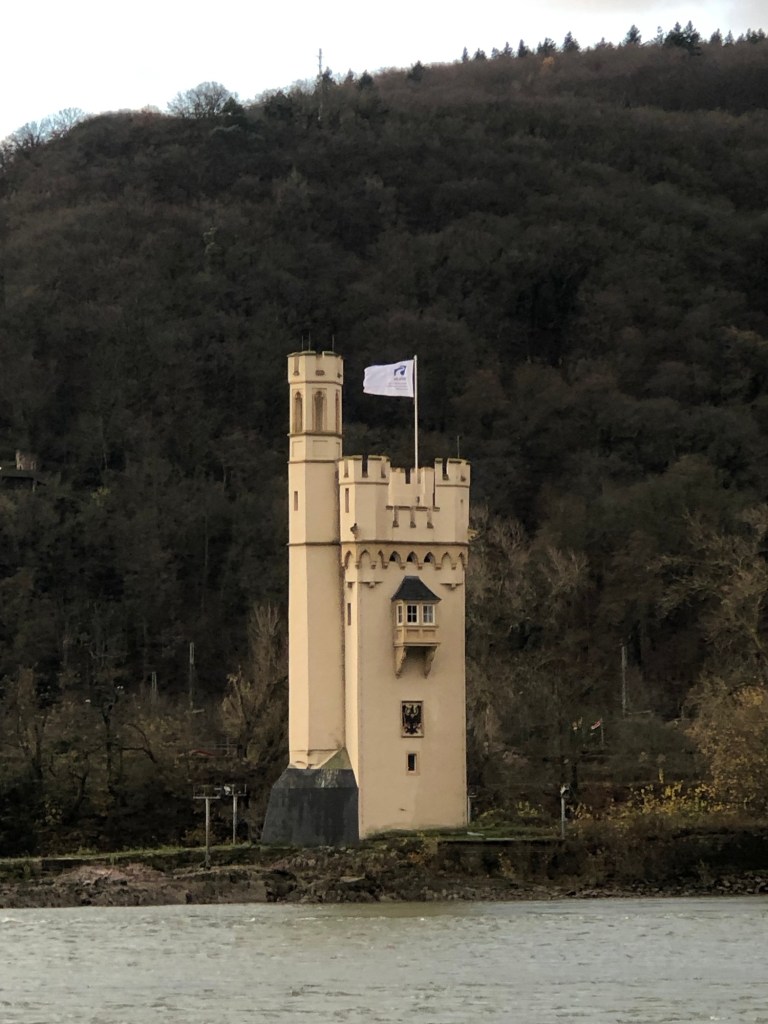
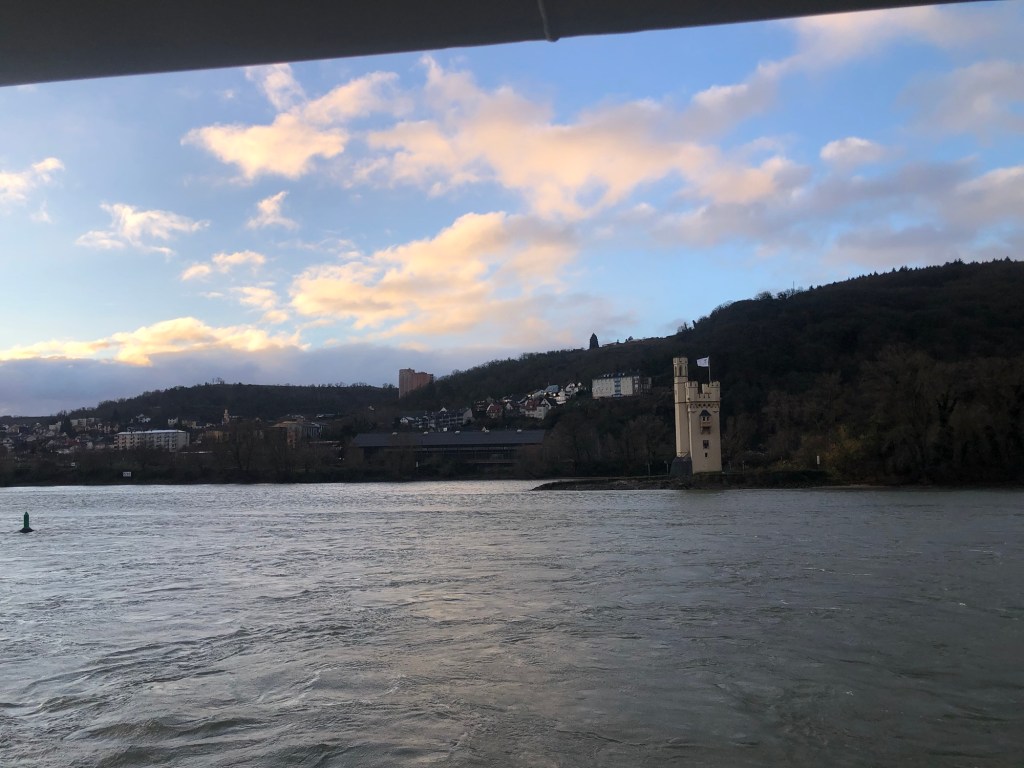
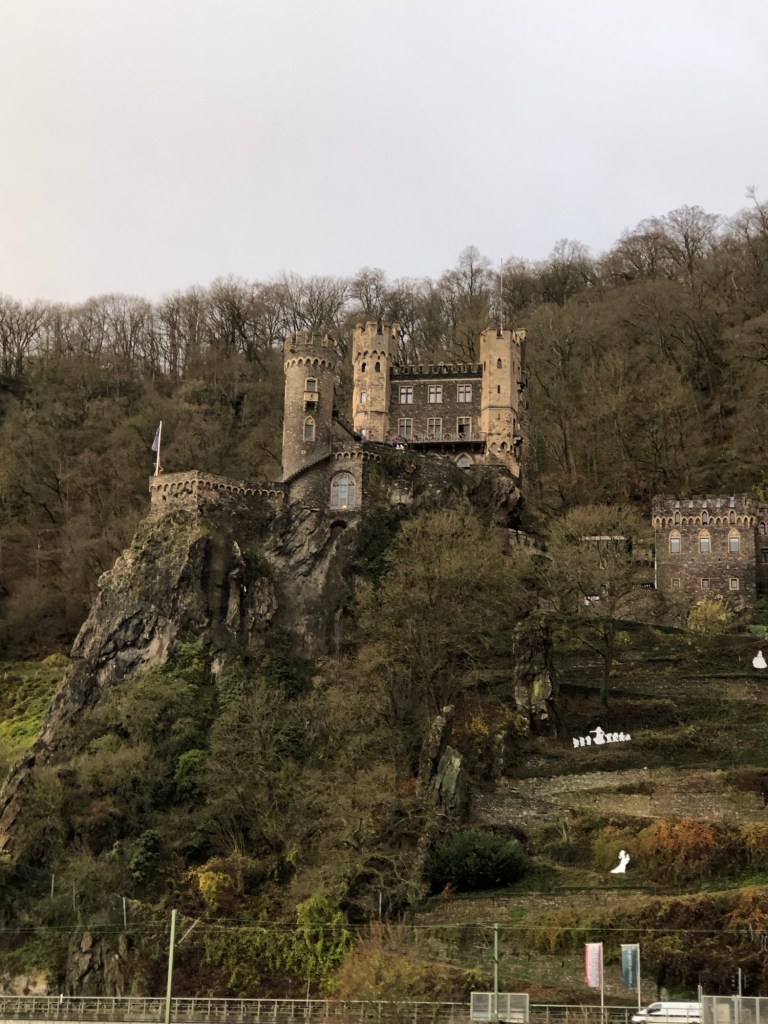






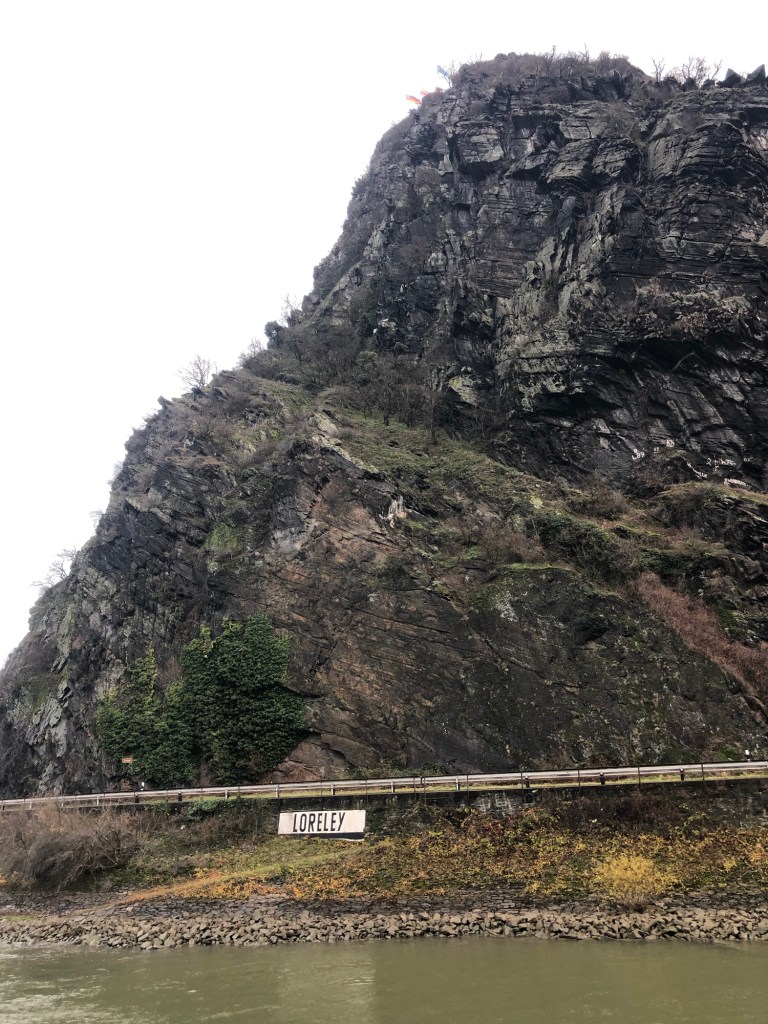

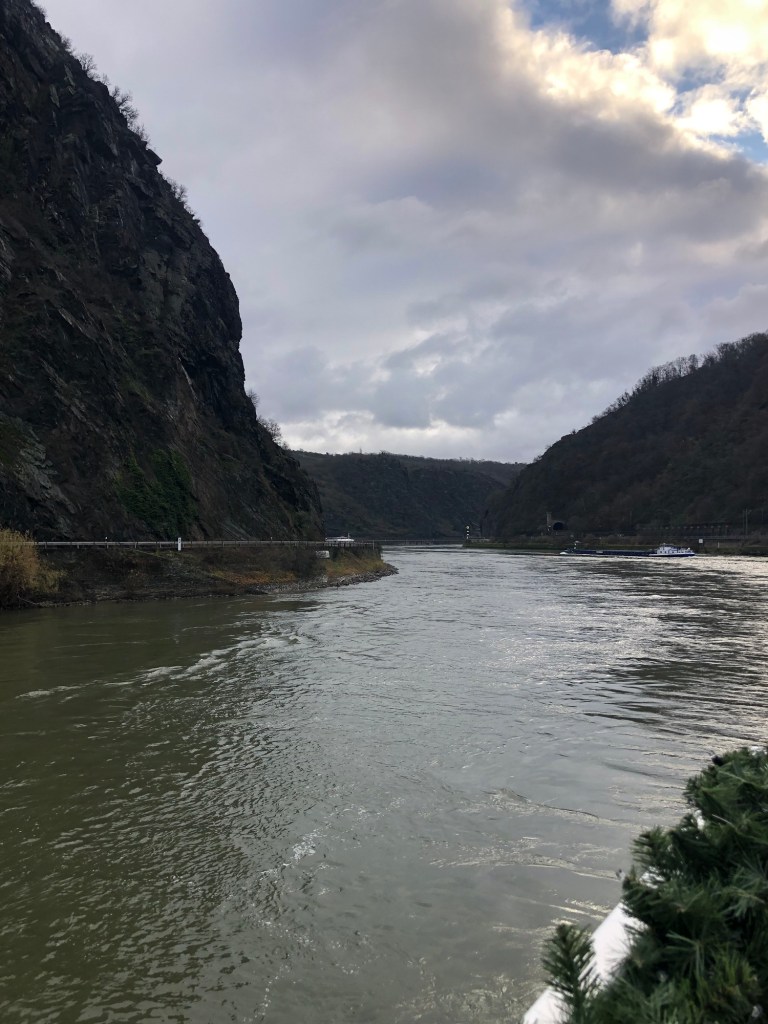
Lorelei Rock can be seen in the above photos; one on approach (right) and one as we pass (left). It’s a massive jagged rock that juts into the river at a narrow point. Many perished there.
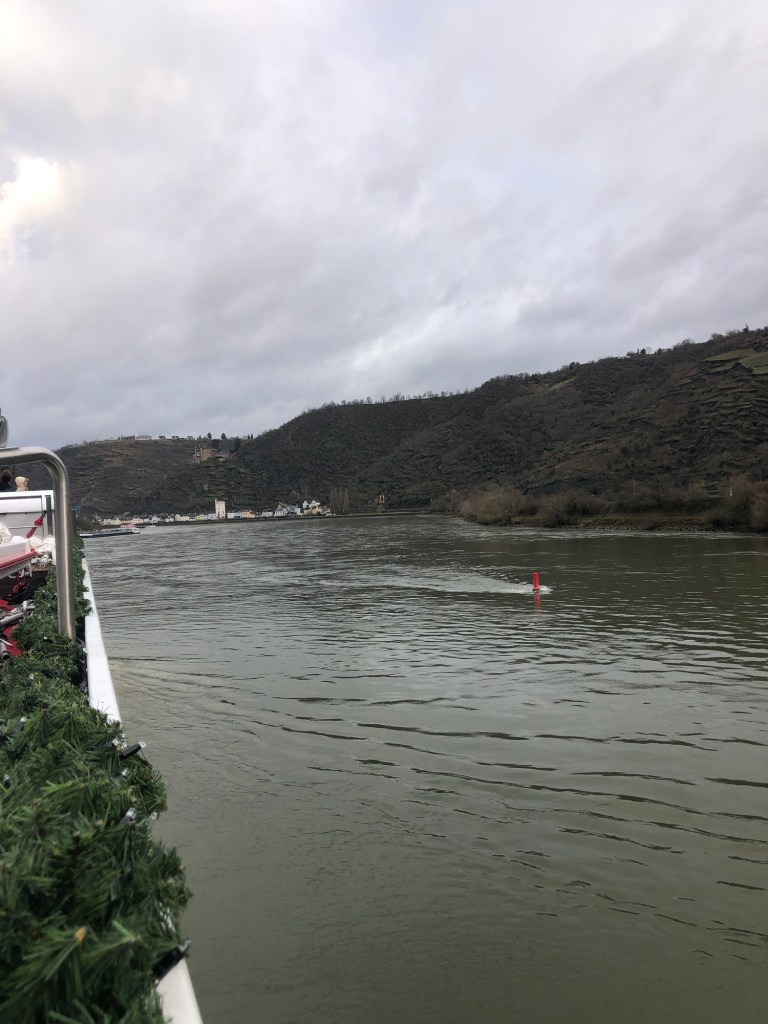

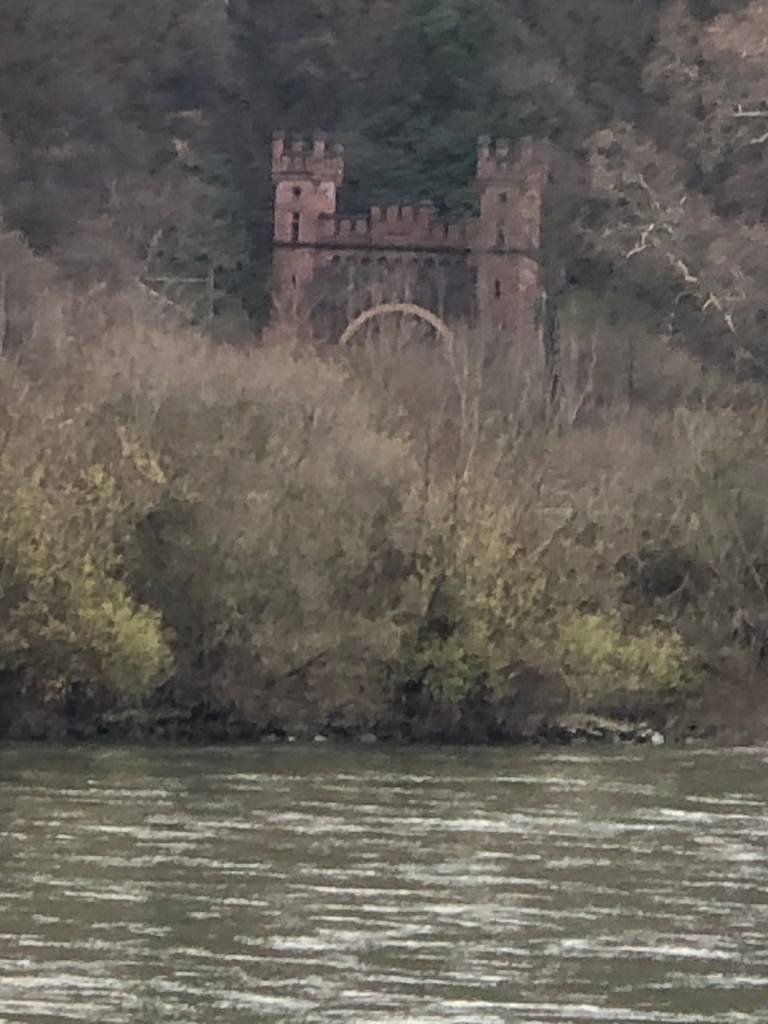
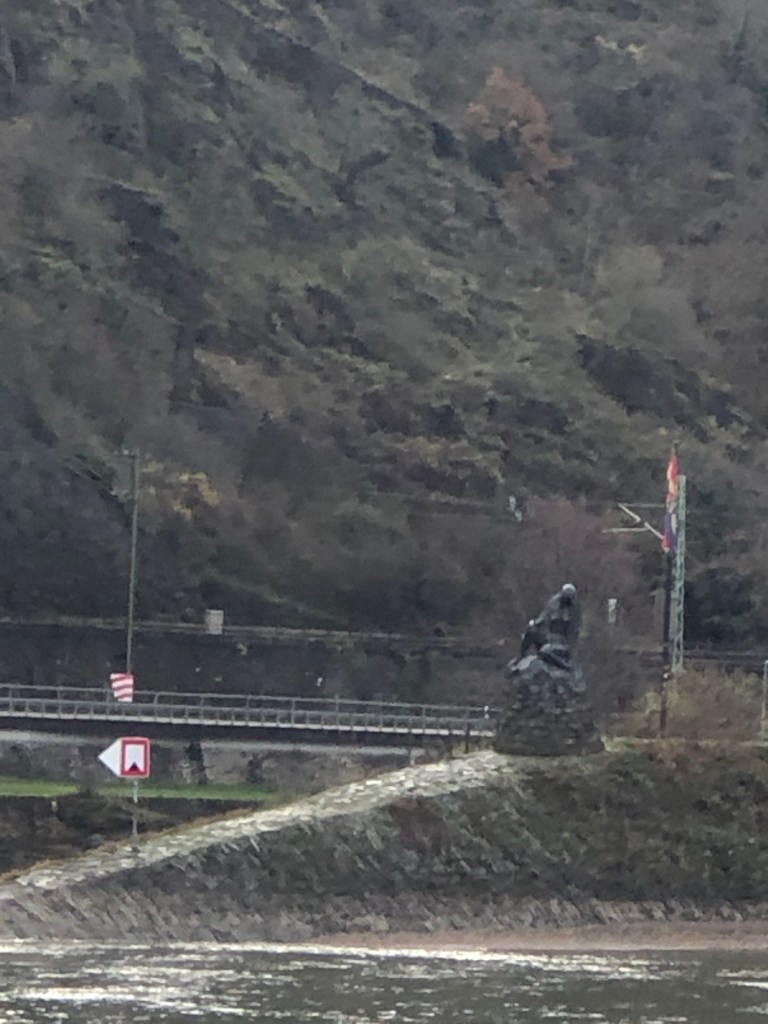








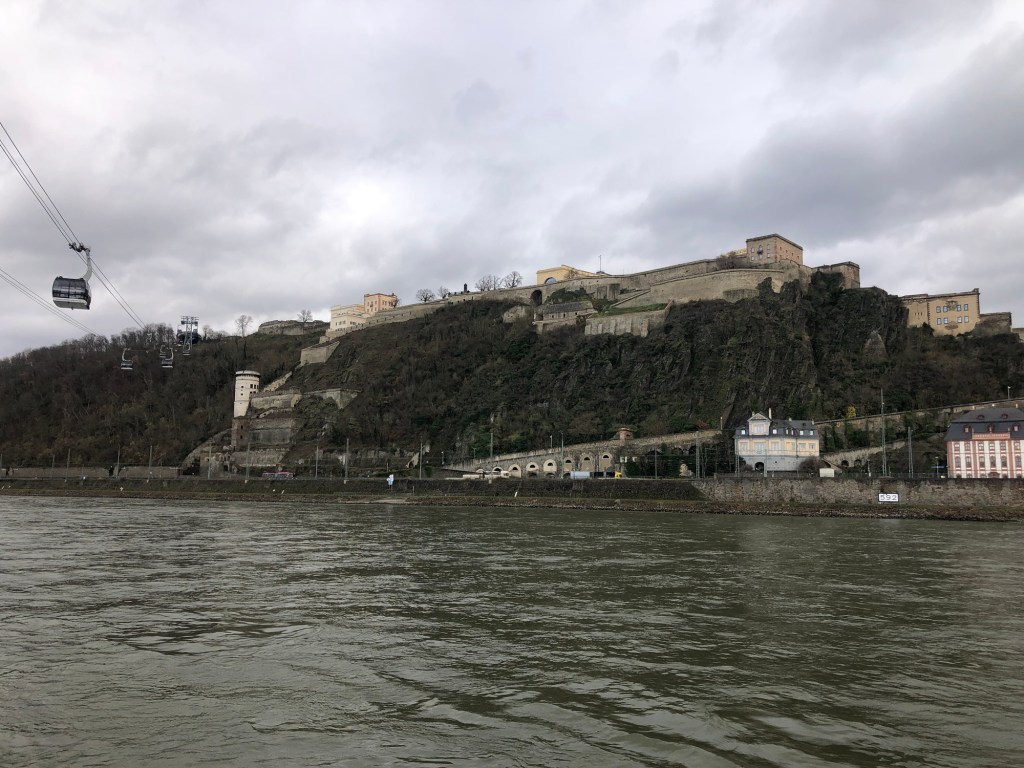
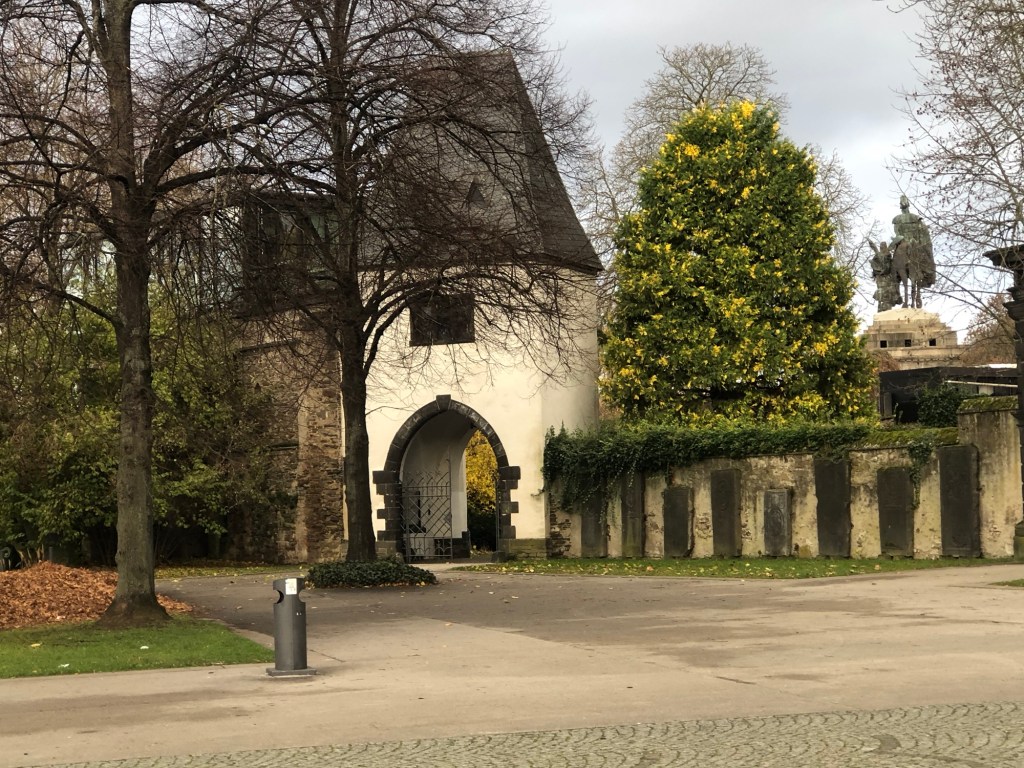
Koblenz is the city where the Rhine and Moselle Rivers intersect. There is a river meeting point called the German Corner.


The imposing statute of Kaiser Wilhelm stands at the corner.

The German corner is also a place where they pay homage to significant events. There is an American flag that was raised in solidarity after 9/11 and these three panels are parts of the Berlin Wall.


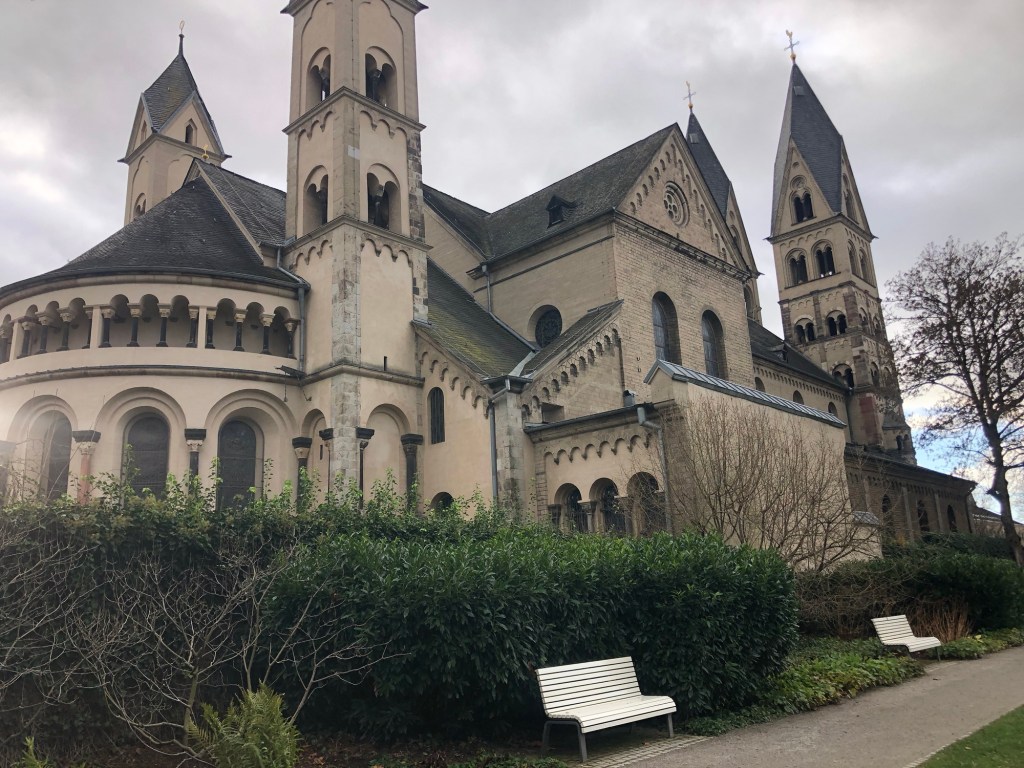

Arch bishops were in charge in medieval times and therefore cathedrals are prominent on our tour. However, we learn that Martin Luther brought about changes and the Protestant religion was formed. Cathedrals are opulent and flashy where their Protestant counterparts are more simple and humble.


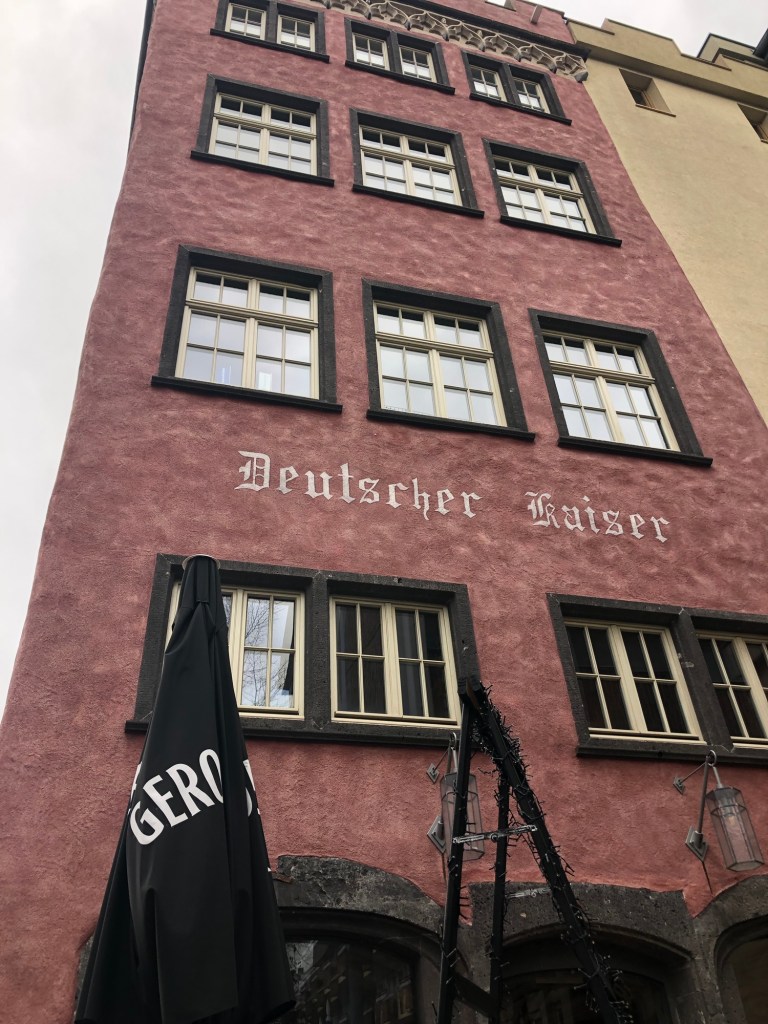

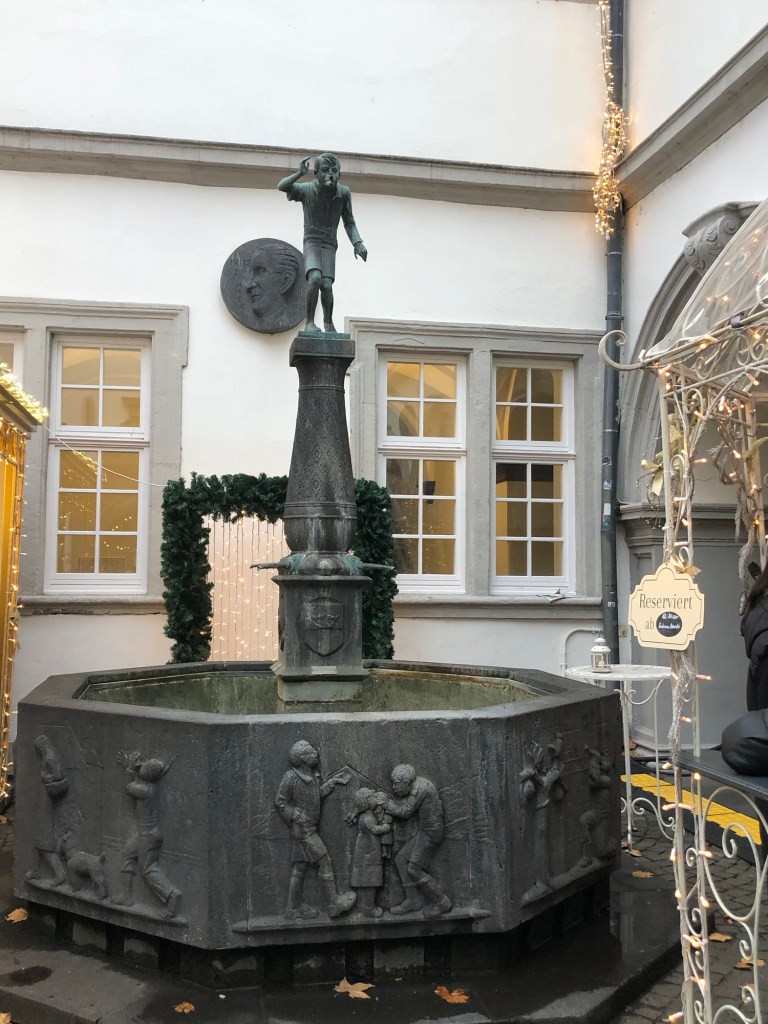
During the war French soldiers met with German girls and the children born were called “Schangels”. These children were not readily accepted and were teased so they acted out. Koblenz adopted the “Schangle” as their city mascot and manholes in town bear his image. There is also a fountain in the town and Schangel spits water in the warm months.


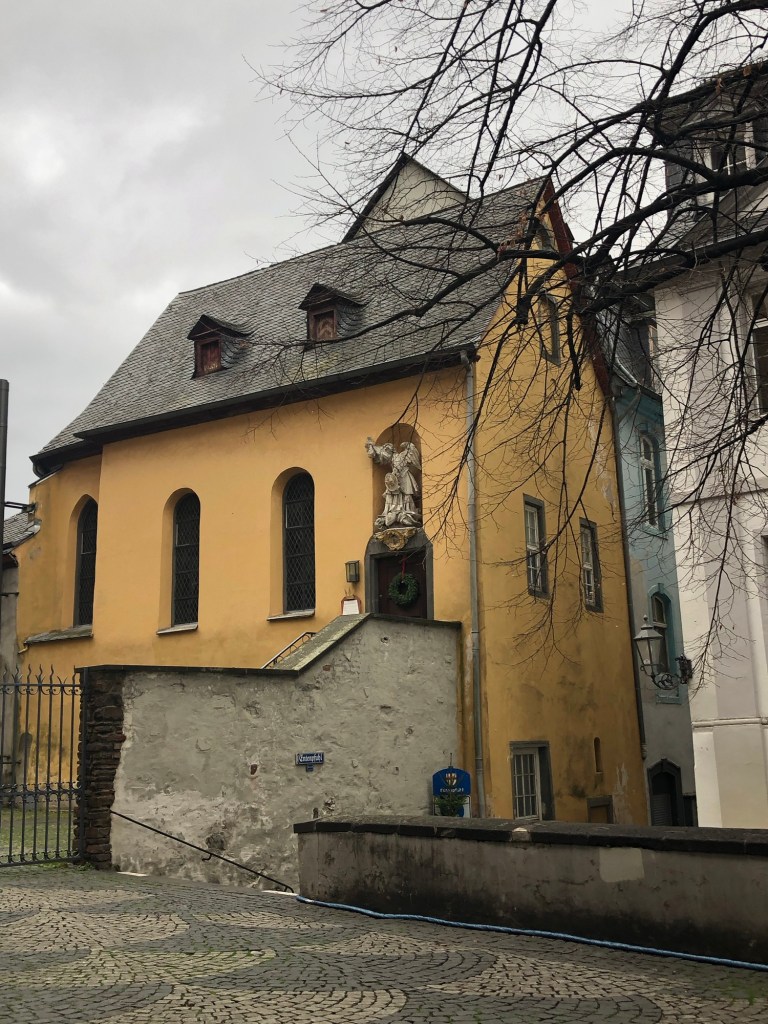
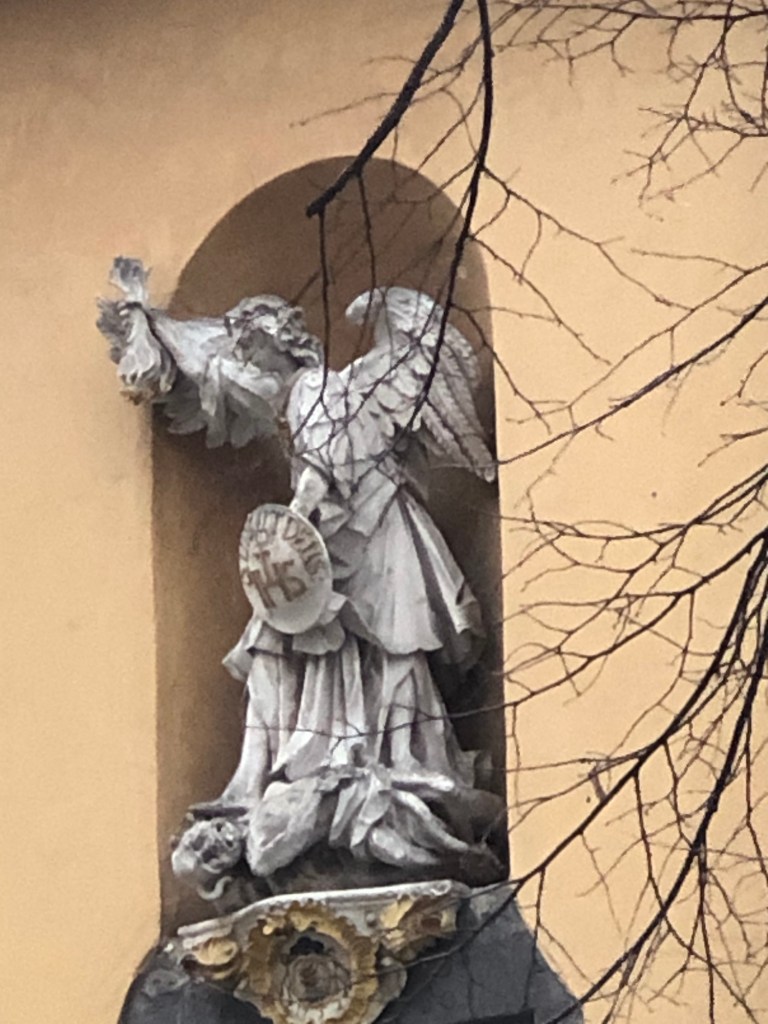
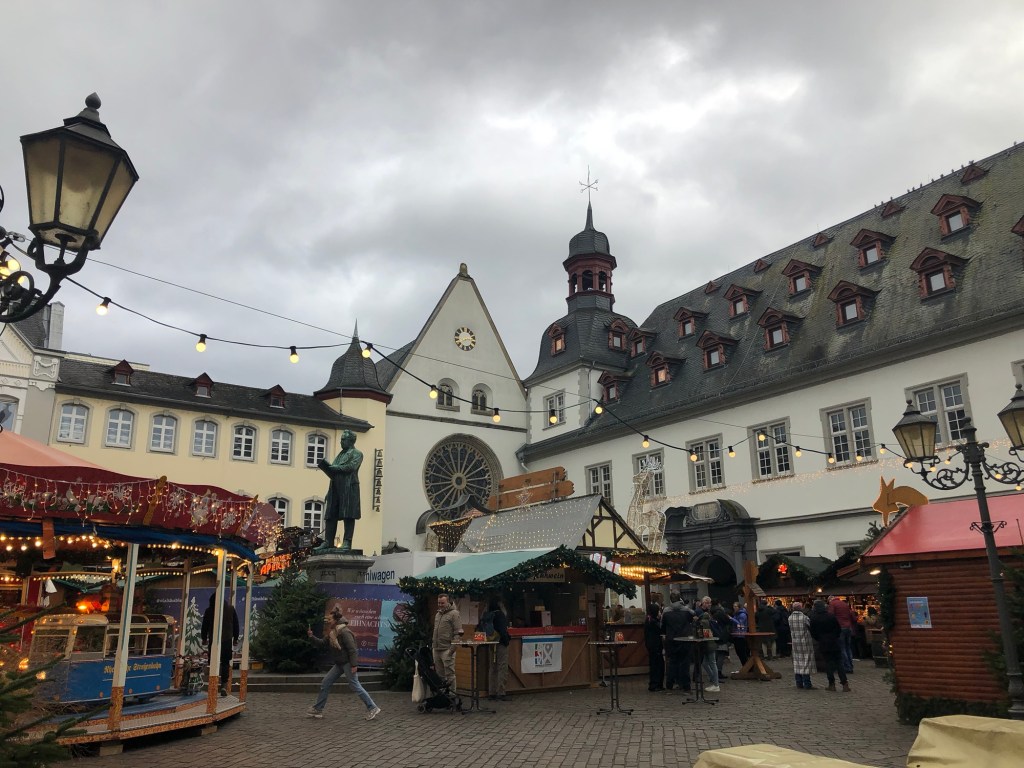


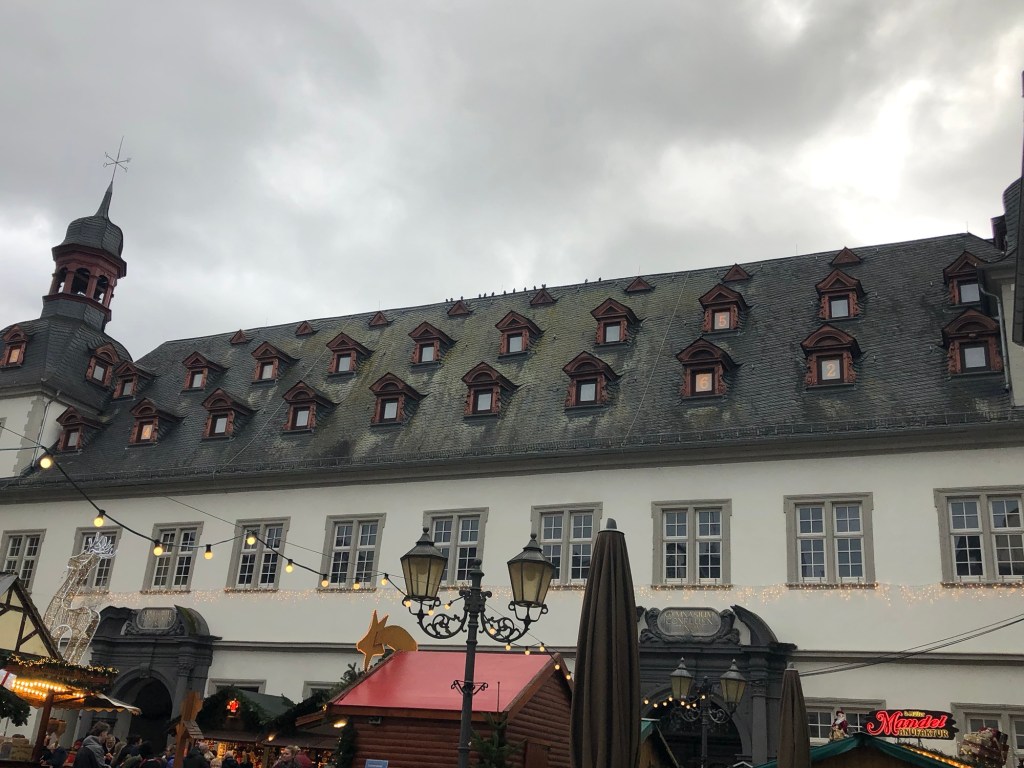
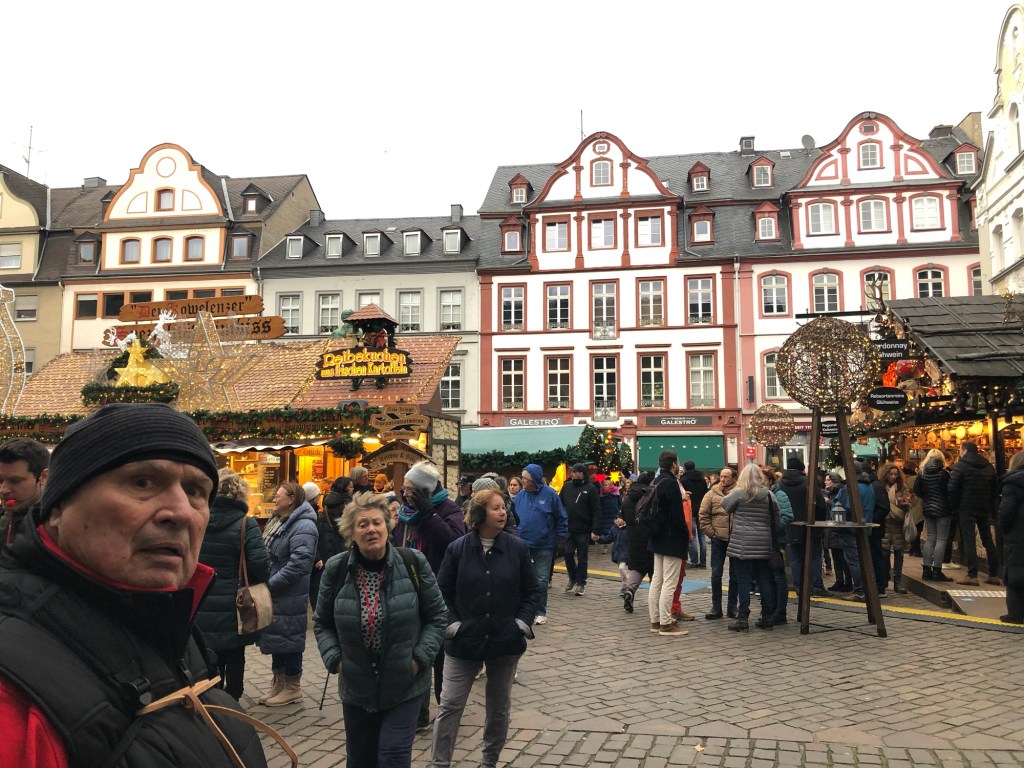
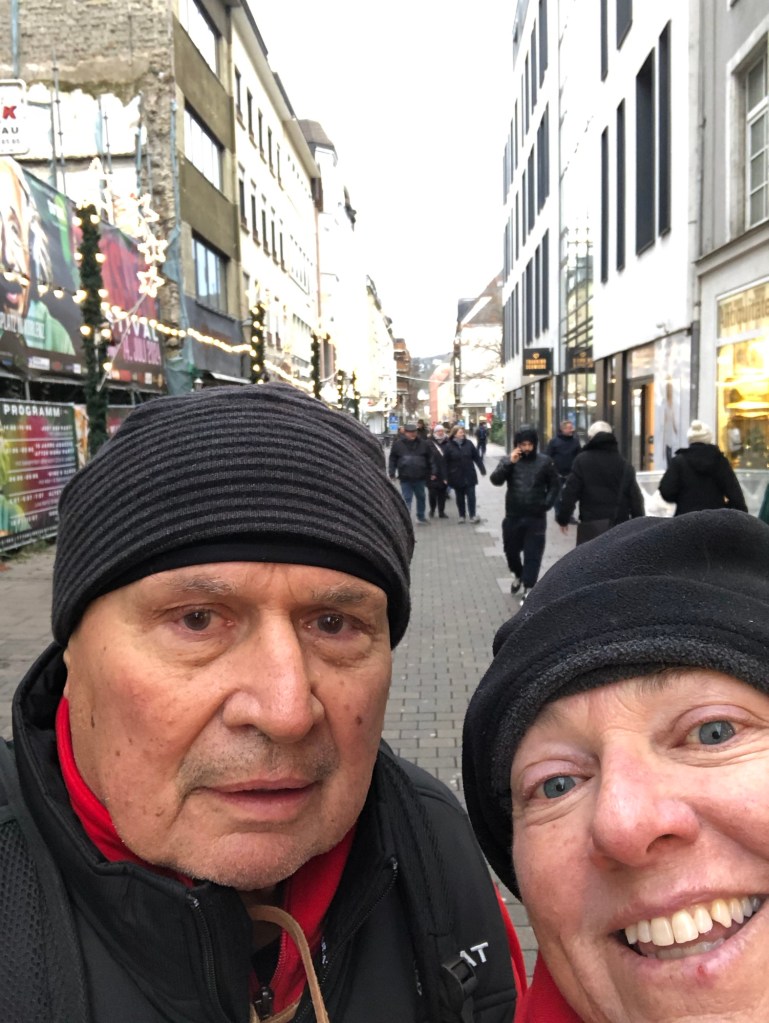

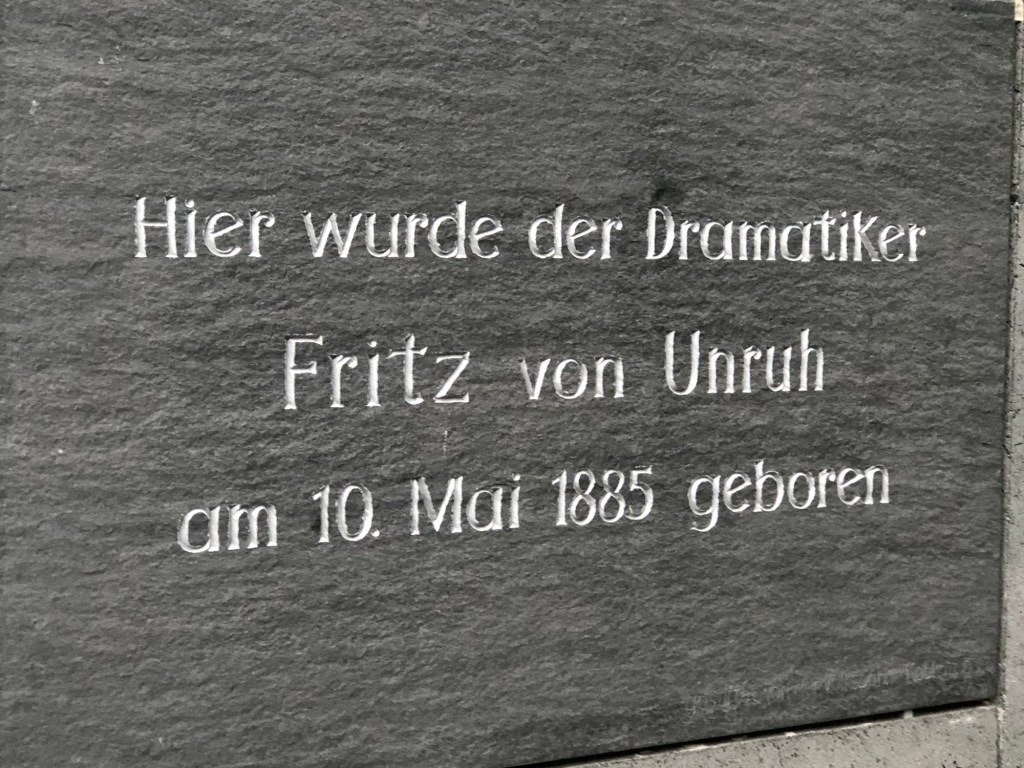
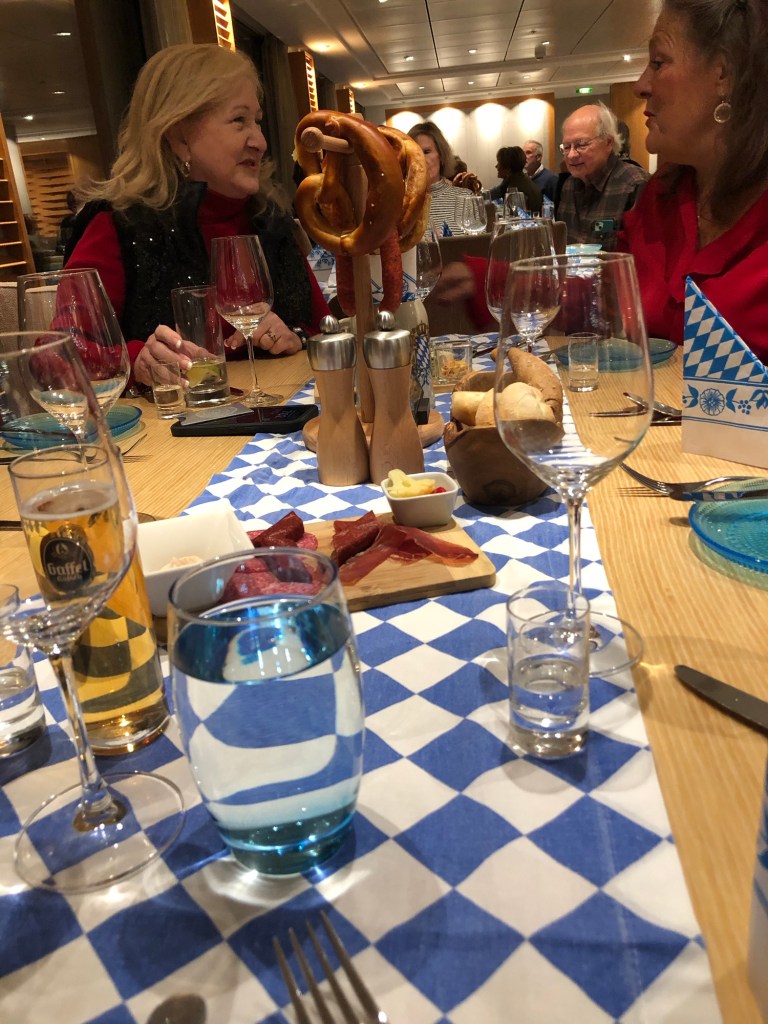
Later, back on the ship, we are invited to a taste of Germany dinner.
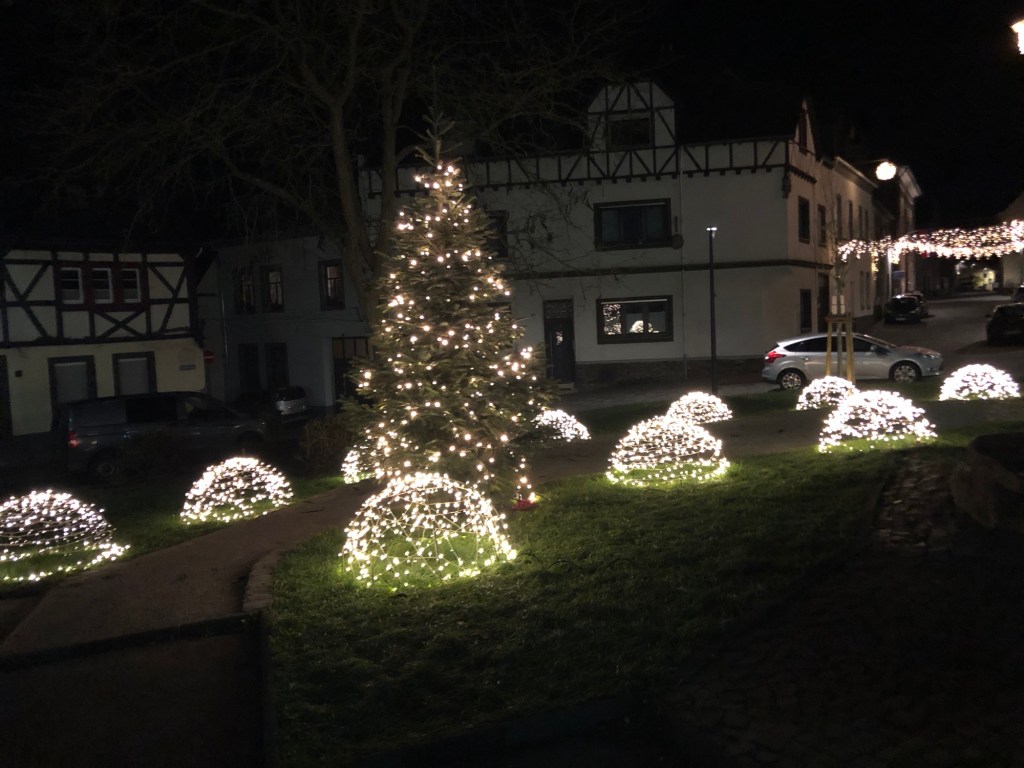
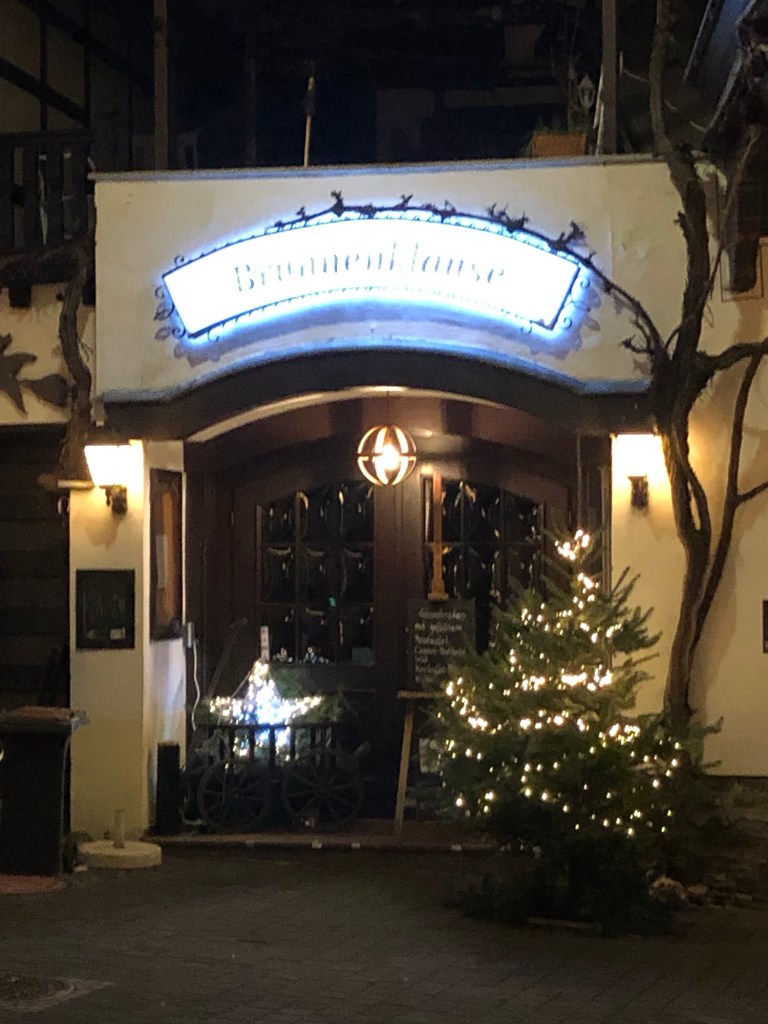
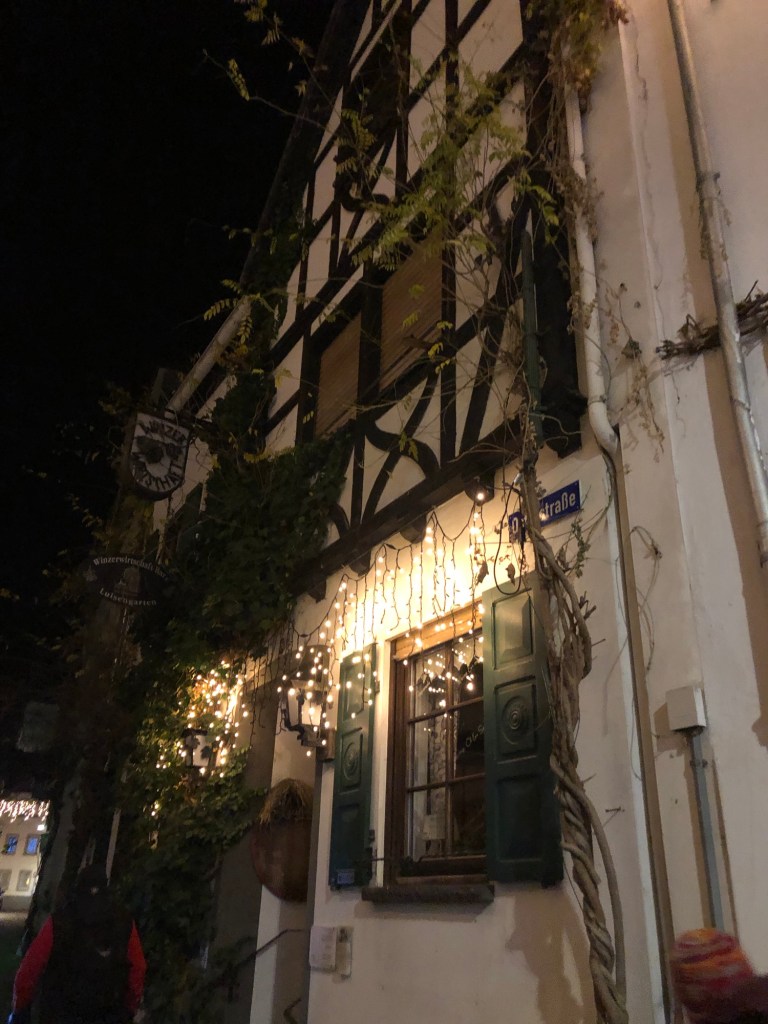
Later that evening we head out for a special tour in Winnigen. It’s a small hamlet known for its wine making.

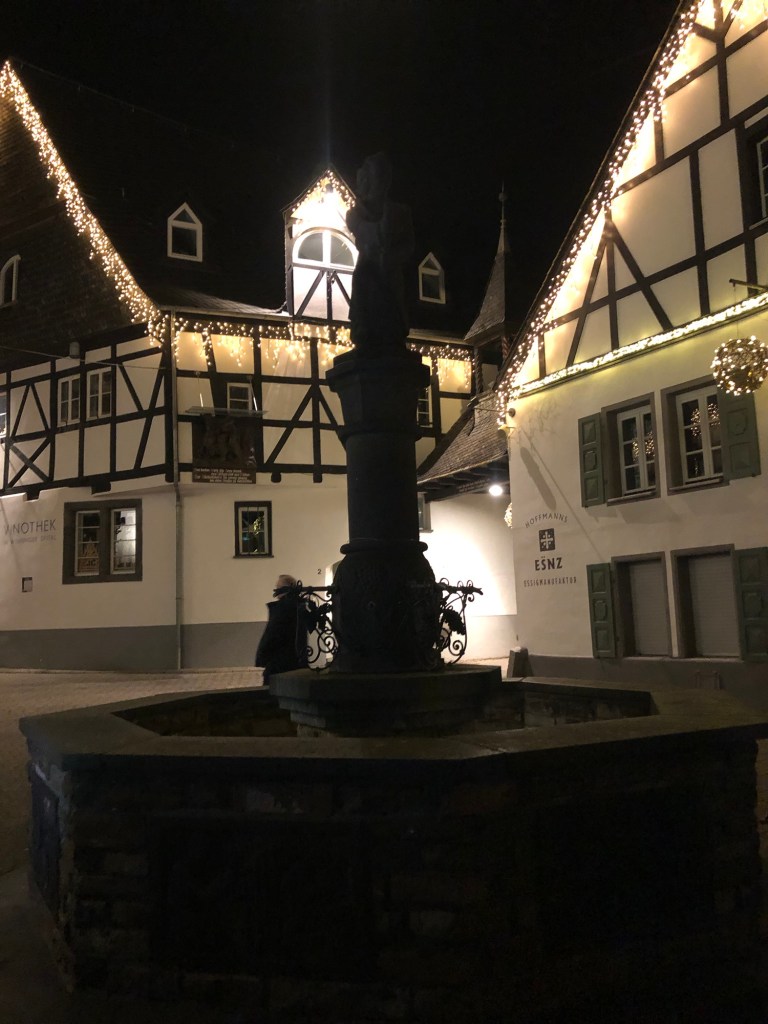
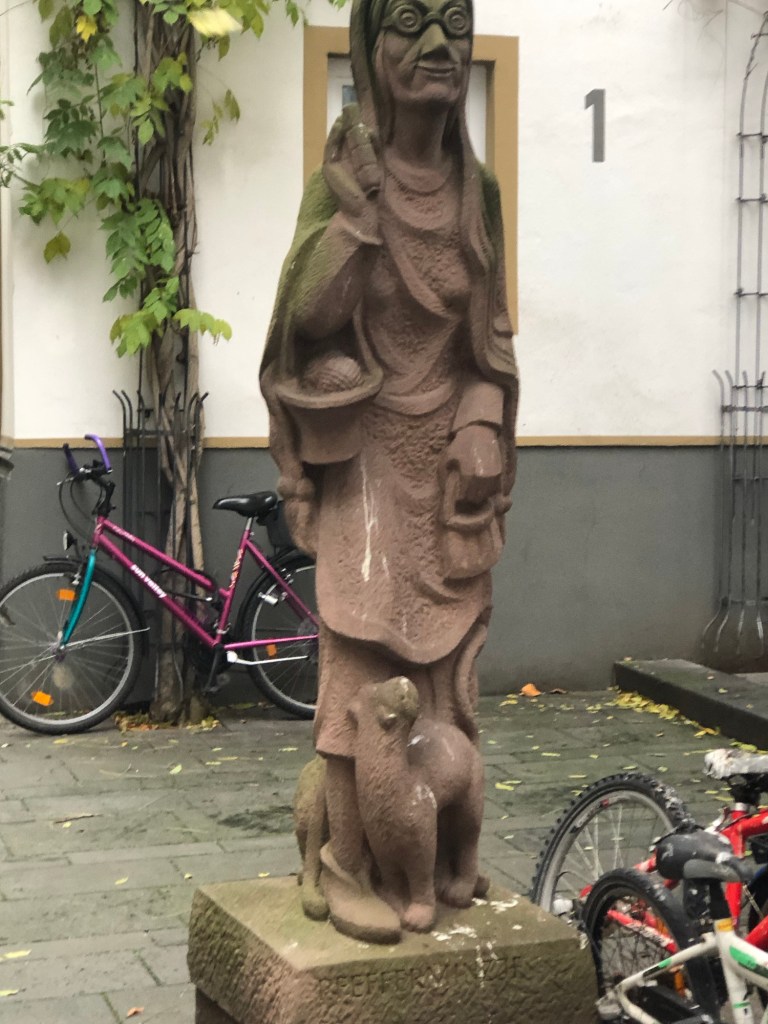
The legend of the wine witch is told that a woman who was using local herbs to heal was declared a witch and imprisoned. However when the towns mayor became deathly ill and could not be healed, he summoned the witch from prison. She cured him! The wine witch is now celebrated at the annual wine festival. The largest in the region.
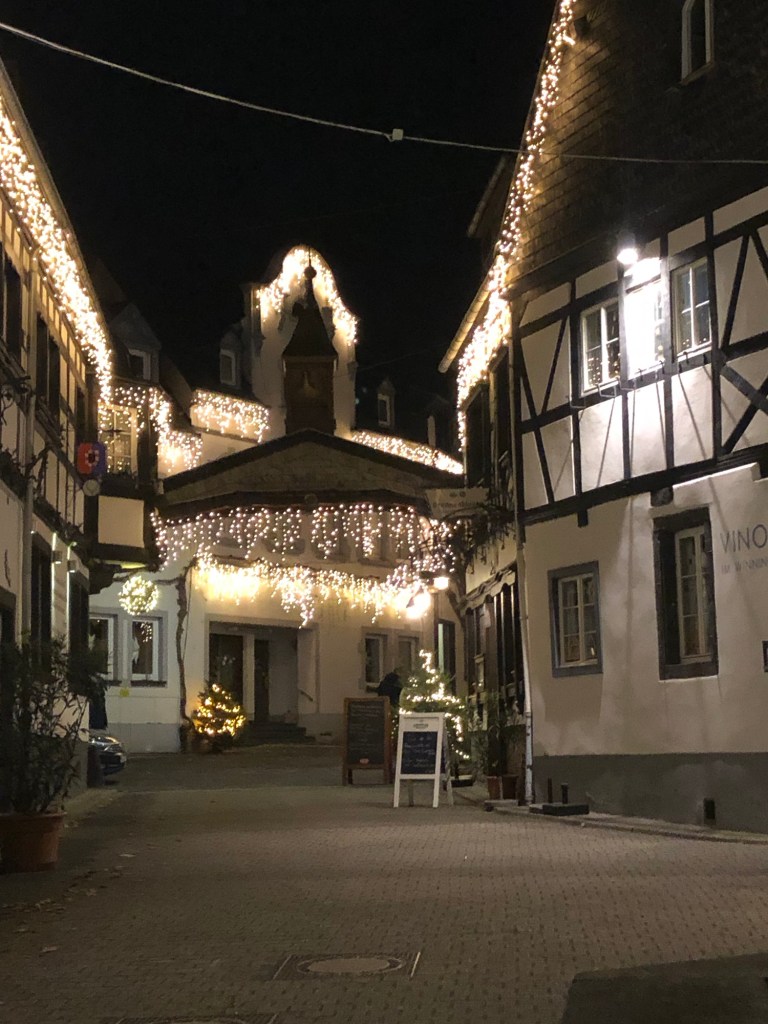
We strolled to the town church for an organ recital.



Fair warning: our next day in Cochem was a write off for me. I became violently ill in the night. As it turns out, so did others. I guess the taste of Germany did not agree with me. Luckily my private nurse, Rudy, was very attentive 💗
See you in Trier!
 Retiring at the Speed of Life